
Bookkeeper com Review: Features, Pricing & Alternatives

how much does bookkeeping cost

It did, however, score high in the bookkeeping services and tax and consulting categories, earning a perfect score in the latter. Essentially, a monthly accounting service offers a dedicated bookkeeper and tax accountant who work together for you under one roof. Bookkeepers look at transactional data, but accountants look at the big picture. The two different roles watch for different things; a bookkeeper is like a controller, and an accountant is like a CFO.

  • The budget also proposes to expand qualifying business transfers to include the sale of shares to a workers cooperative corporation, provided it meets certain conditions.
  • It records all your financial metrics and assures you maintain regulatory compliance at the state and federal levels.
  • In addition to these basic bookkeeping activities, your costs will be impacted by how your accounting systems, policies and procedures, and reporting needs are set up and administered.
  • If they value your relationship and the service you provide, they’ll understand why you make  occasional and reasonable increases.
  • Instead, a separate loss restriction rule applies to extinguish the losses of bankrupt corporations that have received an absolute order of discharge.
  • If you spend too much time on bookkeeping, it’s easier to hire a bookkeeper to keep track of your financial records, financial statements, and other elements.

Don’t continue handling your own bookkeeping or pawning it off on your administrative worker as you grow! Instead, consider hiring an in-house bookkeeper, outsourcing a bookkeeping service, or even upgrading to a monthly accounting service. With all of these extra services and benefits beyond a typical bookkeeping service, how does the investment compare? If you find bookkeeping, advising, and tax services valuable, monthly accounting is a way to combine them for what is essentially a bundled discount. After digging through the pricing tiers of a number of different bookkeeping service providers, we’ve found that the average range for small to medium businesses is $250 – $1,500 per month. If your business is moving into a growth stage, you need to consider graduating to full accrual based accounting, with financial and management reports that help you scale.

Price factors

If you have any questions, you can schedule unlimited meetings as needed. Bookkeeper.com can be contacted via the online form or over the phone. You can also view your company’s transactions, upload your documents, and request an appointment with your bookkeeper through the Client Portal. While QuickBooks Online has a mobile app that you can use to access your books, there’s no mobile app that allows you to communicate with Bookkeeper.com. We also employ a comprehensive editorial process that involves expert writers. This process ensures that articles are well-researched and organized, offering in-depth insights and recommendations.

how much does bookkeeping cost

Bookkeeper.com manages your accounts using QuickBooks Online or QuickBooks Desktop. You’ll maintain access to your QuickBooks account so that you can monitor the activities performed by Bookkeeper.com on your behalf and access up-to-date financial reports. Your bookkeeper will provide a balance sheet, statement of P&L, and statement of cash flows, plus customized reports, which are available with any plan. There are also financial calculators available within the software, allowing you to play with different scenarios, along with graphs, charts, and tables.

ways to price your bookkeeping services

We’re familiar with all the small business tax deductions and compliance requirements. It allows you to pay a set price each month for an unlimited amount of work. However, when talking about bookkeeper costs, it is important to note their differences. For one, a bookkeeper is generally cheaper than an accountant, because they have different functions, expertise, and qualifications. Figuring out the right price or the right way to package your services isn’t easy.

In general, accountants usually need a bachelor’s degree in accounting and pass a CPA exam in their state. Although bookkeeping may not be the most exciting part of running a business, it’s arguably one of the most important. Accurate and timely bookkeeping allows you to make sound financial decisions.

Is contracted services or in-house better?

The more certifications a provider has, the more qualified they are expected to be at what they do. As such, a provider with two certificates will charge a higher rate than one with just a single certificate. Bookkeepers do a lot of tedious work, but they can do it a lot more efficiently because they’re professionals.

For a short taxation year, the accelerated CCA must be prorated and will not be available in the following taxation year. Property that becomes available for use after 2026 and before 2028 how much does bookkeeping cost will continue to benefit from the AII. The Accelerated Investment Incentive (AII), which suspends the half-year rule, will continue to apply to eligible property put in use before 2028.

However, as you grow, you may want to consider having someone else solely handle your bookkeeping. For a small business that needs help with bookkeeping and expense entry, QuickBooks Live Bookkeeping is a great resource to get the work done for a low monthly fee. So if you’re ready to wave the white flag on handling your red and black margins, let one of BELAY’s experienced remote bookkeepers help. Now that you have a better idea of what you’re looking for, here are five questions to ask to make sure you hire the right bookkeeper for your business. Let’s compare the cost of an in-house bookkeeper vs. an outsourced bookkeeper.
how much does bookkeeping cost

Hedge Fund Administration Services

Clients can choose from a range of administration services to ensure compliance with evolving regulations and reporting requirements. Our accounting platform—supported by a global team of product and operations experts—is fully integrated with financial reporting, compliance, tax and expense administration capabilities to ensure data quality and consistency. HedgeServ reduces the operational costs, risks, and inefficiencies inherent in traditional middle office outsourcing, such as spreadsheet dependencies, disparate data sources, timezone mismatches, and duplication of efforts.

  • Outsourcing fund administration, fund accounting and other back office services is about much more than cost-management.
  • The BNP Paribas integrated bank model allows us to offer clients a complete hedge fund outsourcing solution – from core fund administration, through to depositary, custody, cash, FX, financing and prime brokerage solutions.
  • Our robust and flexible technology supports the most unique requirements and employs deep automation with machine learning to eliminate manual processes, reduce risk and errors, and increase productivity.

Eligibility for particular products and services will be determined by JPMorgan Chase Bank, N.A. Access topical regulatory insights to help inform investment decisions, operations and outcomes. Hedge Fund Administration Services Stay on top of the latest regulations impacting your business with relevant thought leadership and insights. Address your data challenges and drive operational efficiencies with Fusion by J.P.

Depositary Services

Access to this Site is permitted on a temporary basis and we reserve the right to withdraw or amend the Site without notice. We will not be liable if for any reason the Site is unavailable at any time or for any period. From time to time, we may restrict access to some parts of the Site, or the entire Site, to users who have registered with us. Investors eyeing the nascent recovery will find that many trends are accelerating as the world adapts to new realities. Hybrid funds have emerged as an increasingly popular way to satisfy investor demand for diversification resulting in exceptional returns. We aim to be the most respected financial services firm in the world, serving corporations and individuals in more than 100 countries.

Hedge Fund Administration Services

HedgeServ service teams are client-aligned, with clear senior points of contact and end-to-end accountability for their relevant processes and reporting deliverables. Outsourcing fund administration, fund accounting and other back office services is about much more than cost-management. BNY Mellon’s Investor Services and Reporting will help you maintain oversight of transactions and cash movement. You’ll get access to NEXEN®, our proprietary portal for investor services and reporting, unlocking a focused set of insights, powerful transactional tools and advanced reporting capabilities that will help set your funds apart.

Solutions

James has over 16 years of fund accounting experience, with a particular focus on private equity, direct lending and real assets. HedgeServ helps managers to understand the drivers of their performance and portfolio risk through a customizable suite of trader and factor-based risk analytics. HedgeServ configures and integrates a risk management solution to meet each client’s unique reporting needs and frequencies, supported by a front office team of risk and valuation professionals. Citco is a pioneer in independent fund administration for the alternative investment industry, offering scalable and innovative solutions to meet your specific needs. Mounting regulatory requirements, expanding data sets, and an increasingly demanding investor base seeking transparency, real-time reporting and a consistent user experience, is placing enormous pressure on a fund manager’s in-house infrastructure.

For our transition clients, on average, HedgeServ has compressed NAV delivery times by between 20-30% versus those clients’ prior administrators. These benefits extend downstream, resulting in accurate, timely financial, tax, and regulatory reporting – all sourced from a single database and tied to the fund’s official books & records. Founded in 2008, HedgeServ is led by the most experienced management team in fund administration. In 1995, this same team introduced what is now the definitive industry model of daily accounting, https://quickbooks-payroll.org/ daily or weekly estimated NAVs, outsourced middle office services, and integrated risk analytics. BNY Mellon helps you conquer complexity, offering a comprehensive set of front-, middle- and back-office solutions supported by a team of dedicated experts with broad-ranging experience. By outsourcing your middle- and back-office responsibilities, you’ll turn operations into a strength and free yourself to focus on deploying new products, sharpening your services and managing funds for the best possible performance.

Private Equity Fund Administration

HedgeServ regulatory solutions focus on achieving long-term sustainability and the robustness required to withstand ever-increasing regulator scrutiny. HedgeServ provides full-service support of clients’ global regulatory reporting requirements by pairing knowledgeable professionals with flexible technology, rich tagging, and a unique single database model. Stonegate Global provides hedge fund and private equity fund administration services to large, complex, multi-jurisdictional offshore and domestic fund strictures as well as emerging manager fund products. Our specialised hedge fund administration services include everything from fund setup and regulatory infrastructure to post-trade surveillance, delegated risk management, and compliance services. Access services across the ETF value chain, including liquidity, index creation and securities services, delivered through one global platform.

Hedge Fund Administration Services

By submitting your email address, you acknowledge that you have read the Privacy Statement and that you consent to our processing data in accordance with the Privacy Statement (including international transfers). If you change your mind at any time about wishing to receive the information from us, you can send us an email message using the Contact Us page. We believe the HFA firms that define a growth strategy which complements their core competencies, activities and assets will create more value over the long term. Roger Wohlner is an experienced financial writer, ghostwriter, and advisor with 20 years of experience in the industry. The nature of the Internet is such that we cannot guarantee or warrant the security of any information accessed via the Internet.

HedgeServ owns a similar 100% accuracy rate in terms of distributing statements to investors. HedgeServ pairs systematic controls (SOC 1 Type II certified) and checklist-driven processes with experienced professionals who understand the underlying principles of the work they produce. Legacy administration models can no longer keep pace in today’s increasingly complex environment. Fund managers of all strategies are partnering with HedgeServ to achieve institutional infrastructure, enterprise reporting solutions, and operational best practice at a lower total cost than traditional administration.

  • For each client, HedgeServ constructs a responsive, client-aligned middle office service team (without silos) as well as client-defined post-trade workflows and reporting customized to their unique portfolio and business requirements.
  • Hedge funds can be considered high risk because they pursue aggressive investment strategies and are less regulated than many other types of investments.
  • This authenticity enables automated support of complex processes and calculations (including side letters), systematically enforced controls, and embedded T+0 oversight for our clients.
  • By outsourcing fund administration to a dedicated provider, fund managers can focus on core investment strategies and growing their assets under management.
  • Where the Site contains links to other sites and resources provided by third parties, these links are provided for your information only.

Our dedicated tax team is comprised of experienced tax professionals with strong asset management backgrounds, sourced primarily from the Big Four and Hedge Fund experience. Together, they have crafted a close working relationship with a wide range of the world’s leading audit and tax firms. Operating on a unique single database model and using dynamic reporting tools, our people have a proven ability to handle complex client requirements and short notice requests. HedgeServ’s proprietary investor services system models each fund’s and investor’s unique attributes, terms, and conditions in security master-like detail.

9 2 Account for Uncollectible Accounts Using the Balance Sheet and Income Statement Approaches Principles of Accounting, Volume 1: Financial Accounting

balance sheet approach

The accounts receivable balance is $1 million, so the allowance for doubtful accounts should be $50,000. The allowance for doubtful accounts still has $9,000 left over from it last year, so the company debits bad debt expense for $41,000 and credits allowance for uncollectible accounts for $41,000. The balance sheet method (also known as the percentage of accounts receivable method) estimates bad debt expenses based on the balance in accounts receivable. The method looks at the balance of accounts receivable at the end of the period and assumes that a certain amount will not be collected. Accounts receivable is reported on the balance sheet; thus, it is called the balance sheet method. The balance sheet method is another simple method for calculating bad debt, but it too does not consider how long a debt has been outstanding and the role that plays in debt recovery.

balance sheet approach

While they may seem similar, the current portion of long-term debt is specifically the portion due within this year of a piece of debt that has a maturity of more than one year. For example, if a company takes on a bank loan to be paid off in 5-years, this account will include the portion of that loan due in the next year. The most liquid of all assets, cash, appears on the first line of the balance sheet. Cash Equivalents are also lumped under this what is credit card balance line item and include assets that have short-term maturities under three months or assets that the company can liquidate on short notice, such as marketable securities. Companies will generally disclose what equivalents it includes in the footnotes to the balance sheet. That’s because a company has to pay for all the things it owns (assets) by either borrowing money (taking on liabilities) or taking it from investors (issuing shareholder equity).

Assets

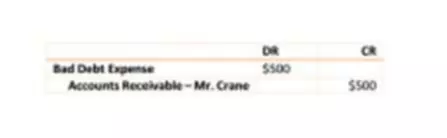
The statement is helpful to the stakeholders or say interested parties, in learning about the sources and uses of the company’s cash during a particular financial year, from different activities. Fundamental analysts, when valuing a company or considering an investment opportunity, normally start by examining the balance sheet. This is because the balance sheet is a snapshot of a company’s assets and liabilities at a single point in time, not spread over the course of a year such as with the income statement. The allowance method is the more widely used method because it satisfies the matching principle. The allowance method estimates bad debt during a period, based on certain computational approaches. When the estimation is recorded at the end of a period, the following entry occurs.

  • The balance sheet approach determines an expatriate’s salary based on the going rate for the same — or a similar — position in their home country.
  • If, for example, rent in the host country is more expensive than an employee’s home country, the organization will pay the difference.
  • A company can use its balance sheet to craft internal decisions, though the information presented is usually not as helpful as an income statement.
  • A balance sheet explains the financial position of a company at a specific point in time.
  • This is because the balance sheet is a snapshot of a company’s assets and liabilities at a single point in time, not spread over the course of a year such as with the income statement.
  • In this article, we have discussed some noteworthy differences between Balance Sheet and Cash Flow Statement.

That total is reported in Bad Debt Expense and Allowance for Doubtful Accounts, if there is no carryover balance from a prior period. If there is a carryover balance, that must be considered before recording Bad Debt Expense. The balance sheet aging of receivables method is more complicated than the other two methods, but it tends to produce more accurate results. Continuing our examination of the balance sheet method, assume that BWW’s end-of-year accounts receivable balance totaled $324,850. This entry assumes a zero balance in Allowance for Doubtful Accounts from the prior period. BWW estimates 15% of its overall accounts receivable will result in bad debt.

Definition of Balance Sheet

For example, accounts receivable must be continually assessed for impairment and adjusted to reflect potential uncollectible accounts. Without knowing which receivables a company is likely to actually receive, a company must make estimates and reflect their best guess as part of the balance sheet. Additional paid-in capital or capital surplus represents the amount shareholders have invested in excess of the common or preferred stock accounts, which are based on par value rather than market price. Shareholder equity is not directly related to a company’s market capitalization. The latter is based on the current price of a stock, while paid-in capital is the sum of the equity that has been purchased at any price. Shareholder equity is the money attributable to the owners of a business or its shareholders.

Analysis: US banks hold $3.3 trillion cash amid banking crisis … – Reuters

Analysis: US banks hold $3.3 trillion cash amid banking crisis ….

Posted: Tue, 05 Sep 2023 10:23:00 GMT [source]

The following table reflects how the relationship would be reflected in the current (short-term) section of the company’s Balance Sheet. Taking the full balance sheet approach is an efficient way to differentiate yourself from other financial advisors in today’s increasingly competitive environment. It can help you win new business and retain existing clients by shifting the conversation beyond AUM to the rest of the client’s balance sheet.

Limitations of a Balance Sheet

However, the way these investors accumulate wealth is very different from their predecessors, which makes it hard for traditional banks to underwrite them for real estate loans. Instead of working at the same company for 30 or 40 years, for example, many of these investors are self-employed entrepreneurs earning money online via e-commerce or social media channels. Any amount remaining (or exceeding) is added to (deducted from) retained earnings.

A bank statement is often used by parties outside of a company to gauge the company’s health. Banks, lenders, and other institutions may calculate financial ratios off of the balance sheet balances to gauge how much https://online-accounting.net/ risk a company carries, how liquid its assets are, and how likely the company will remain solvent. Last, a balance sheet is subject to several areas of professional judgement that may materially impact the report.

How the Balance Sheet is Structured

Pay attention to the balance sheet’s footnotes in order to determine which systems are being used in their accounting and to look out for red flags. Some companies issue preferred stock, which will be listed separately from common stock under this section. Preferred stock is assigned an arbitrary par value (as is common stock, in some cases) that has no bearing on the market value of the shares. The common stock and preferred stock accounts are calculated by multiplying the par value by the number of shares issued. It’s also not out of the realm of possibility that stablecoins could take share of remittances from Bitcoin.

  • Before getting a business loan or meeting with potential investors, a company has to provide an up-to-date balance sheet.
  • Regardless of the size of a company or industry in which it operates, there are many benefits of reading, analyzing, and understanding its balance sheet.
  • Common liabilities include accounts payable, deferred income, long-term debt, and customer deposits if the business is large enough.
  • However, if you’re going to become a serious stock investor, a basic understanding of the fundamentals of financial statement usage is a must.
  • Preferred stock is assigned an arbitrary par value (as is common stock, in some cases) that has no bearing on the market value of the shares.
  • In contrast, the income and cash flow statements reflect a company’s operations for its whole fiscal year—365 days.

The employee is expected to contribute a portion of their salary to each of these four categories, equivalent to what they would typically pay for each one at home. If, for example, rent in the host country is more expensive than an employee’s home country, the organization will pay the difference. This serves to protect employees from cost differences between the home and host countries. Harold Averkamp (CPA, MBA) has worked as a university accounting instructor, accountant, and consultant for more than 25 years.

The right partner will help you identify opportunities on the liability side of your clients’ balance sheets and then deliver the expertise, access and product knowledge as a partner in the relationship. This financial statement lists everything a company owns and all of its debt. A company will be able to quickly assess whether it has borrowed too much money, whether the assets it owns are not liquid enough, or whether it has enough cash on hand to meet current demands. If you don’t want to simply measure debt as a percentage of ending accounts receivable, you can make a more nuanced calculation through the aging of receivables method.

balance sheet approach

You currently use the income statement method to estimate bad debt at 4.5% of credit sales. You are considering switching to the balance sheet aging of receivables method. This would split accounts receivable into three past- due categories and assign a percentage to each group.

2020-2021 Nonprofit CEO Compensation Study Excellence in Giving

how much of a nonprofit budget should be salaries

Watchdogs also highlight legitimate, well-run nonprofits, and they give nonprofit https://nerdbot.com/2025/06/10/the-key-benefits-of-accounting-services-for-nonprofit-organizations/ boards a basis for how to evaluate themselves in this area. Even a great budget can fall short without strong cash flow management. Cash flow ensures your organization can meet its obligations month-to-month. Keeping that in mind, let’s go over what we’ve learned at The Charity CFO While supporting hundreds of nonprofits with their budgets.

Does a nonprofit’s size affect the pay?

how much of a nonprofit budget should be salaries

Often, large-scale nonprofits with national reach are the ones making headlines. But that investment in human resources must be balanced with the fact that our nonprofits were not set up to make anyone rich. Getting off to an effective early start on the annual budget building process is a must. One of the best tactics is to assemble a first draft of the labor budget at the front end of the budget building process. After assessing nonprofit organization revenue and funding resources, labor is always a close second variable in evaluating organizational and operational capacity constraints. A budget helps you track your income and expenses, set financial goals, and make sure you’re using your resources in the most effective way possible, essential for successful nonprofit financial management.

Approving executive compensation

  • Then, see if you can find out how many paid development staff they have by checking their website.
  • Fortunately, a nonprofit line of credit has enabled nonprofits to have a financing alternative to cater to any financial distress, including payroll.
  • We’re going with the definitions used by the IRS, where 501(c)(3) organizations are classified by size of total assets, with cutoffs at $100K, $500K, $1M, $10M, $50M, and greater than $50M.
  • Volunteers are recognized by the Fair Labor Standards Act, under which certain rules apply.

Calculate monthly costs for line items that are easy to estimate on an annual basis and are relatively consistent. Divide the annual amount by the number of months left in your fiscal year. Begin your planning process by asking, “What financial outcome do we want this year?

Can we pay nonprofit employees a bonus?

Focus on one signature event, 10 grant proposals, and 1,000 new donors each year. This is a proven strategy that will help you build up your fundraising without wasting money on events and strategies that aren’t right for your organization. You have to adjust your mindset and convince yourself that spending money on fundraising is a normal part of fundraising. Just like you have to get comfortable asking for money, you have to get The Key Benefits of Accounting Services for Nonprofit Organizations comfortable spending money on fundraising. Charity Navigator wields a lot of influence in the nonprofit sector with its star ratings that take into account how much an organization spends on overhead. Consider hiring an accountant to advise you on categorizing your expenses.

how much of a nonprofit budget should be salaries

Ultimate Guide to Nonprofit Executive Director Compensation

how much of a nonprofit budget should be salaries

Still, many nonprofit board members with an eye to a sustainable future have adopted sound financial management policies that ensure enough financial resources to advance their missions. And one of the prominent financial tools that have fostered financial stability over the years is a nonprofit line of credit. From this labor budget worksheet, a clear picture of salary cost and assigned responsibility areas can be seen.

how much of a nonprofit budget should be salaries

This calculator includes actual salary ranges and guidance on how to customize them. Tom is a multi-disciplined leader with over a decade of experience in nonprofit operations, technology leadership in government, and over two decades of servant leadership. Just like in the for-profit world, pay increases with specialized knowledge, increased responsibility and accountability, and management span.

  • Unlike a business, a nonprofit’s profit (or income beyond expenses) does not go to any person or group of people such as owners or stockholders.
  • This page does not attempt to cover all these issues, but rather to validate how important it is to compensate employees fairly and debunk the myth that “nonprofits only have volunteers.”
  • Sometimes, though, organizations get into trouble because a staff member, usually the CEO or executive director, is paid an excessively high salary.
  • In other words, it’s an estimate of how much money you’ll make and spend over a certain period of time, such as a month or year.
  • Nonprofits may partner with charity-minded companies to put out donation boxes or to ask people to donate to the cause at points of sale, like at cash registers.
  • So instead of an industry benchmark, I’ll share my general observations based on the nonprofits I’ve worked with.

Who Sets the Executive Director’s Compensation?

By systematically applying these steps, you can efficiently manage your nonprofit’s finances, ensuring accurate planning and effective resource allocation. Fundraising is critical for a nonprofit to succeed, so finding ways to make this work more efficiently and productively helps every organization — and board. They lend transparency to donors to help them avoid fraud and scams, and they help stakeholders compare charities against each other. Watchdogs may or may not consider the type, size, and structure of the nonprofits they’re monitoring in their assessment. It’s no secret that nonprofits often operate in unpredictable environments, so your budget should be flexible enough to adapt to growth opportunities and unexpected shortages.

  • If you’ve missed some, you can go back and dive into those other ratios here.
  • Here we share some key findings from this year’s report, which includes over 5,000 pages of compensation data across all nonprofit subject areas.
  • They can make money in various other ways, however, including receiving compensation from the nonprofit.
  • In other words, organizations with a strong culture of volunteerism should see a much lower personnel expense ratio.
  • Some nonprofit organizations have compensation policies that will dictate a salary range for the executive director.
  • Knowing the requisite funds that should be budgeted for nonprofit salaries is essential to predicting expenses and helps in allocating the necessary resources for payroll.
  • Assuming the founder is the Executive Director or President of the nonprofit, the founder’s average an annual salary of $147,241.

A Guide to the 2022-2023 Compensation Landscape

  • It breaks down your revenue by different funding sources and your operating expenses by program and overhead costs.
  • Minimizing line items allows you to be flexible in allocating funds throughout the year.
  • It’s perfectly legal for nonprofits to buy and sell stocks if it helps generate revenue the nonprofit can spend pursuing its mission.
  • The definition of gross income for income tax purposes includes benefits, such as health insurance.
  • This budget includes expected income, expenses, and funding for a small nonprofit organization.

This blog post was originally published in July 2017 and has been revised to provide updated information. Minimizing line items allows you to be flexible in allocating funds throughout the year. Here are some tips and tools to help ease the pain of building your next budget. For more skill development, coaching and tools, check out StriveTogether’s upcoming courses. It’s the tried-and-true strategies that will get you where you want to go. The most important thing is to be consistent in how you assign expenses to categories.

Net Income vs Net Profit: Is There a Difference? 2023

Knowing your net income is one of the most important markers for business success. While other numbers such as gross income and gross profit are also important for different reasons, net income is the bottom-line number that investors and banks want to see. Gross income will almost always be higher than net income since gross profit has not accounted for various costs (e.g., taxes) and accounting charges (e.g., depreciation). For example, a company in the manufacturing industry would likely have COGS listed.

  • You can use your discretionary income to save, invest, pay down debts, or for  travel and entertainment.
  • Operating profit–also called operating income–is the result of subtracting a company’s operating expenses from gross profit.
  • Earnings per share (EPS) is a commonly cited ratio used to show the company’s profitability on a per-share basis.
  • The net earnings calculation is an important metric that is used for assessing the overall financial health of a business.
  • Therefore, if you earn $648, you only pay FICA taxes, and have no other deductions, your net income will be $548.86 (or $648 multiplied by 1 minus the 15.3 percent tax rate).
  • It also includes other income sources, such as income from the sale of an asset.

Mary Girsch-Bock is the expert on accounting software and payroll software for The Ascent. QuickBooks Desktop starts at $299.95 for the Pro plan, which supports up to three users, with the Premier plan running $449.95 per year, for up to five users. For growing businesses, the Enterprise supports up to 30 users and is $849.10 annually. Yarilet Perez is an experienced multimedia journalist and fact-checker with a Master of Science in Journalism. She has worked in multiple cities covering breaking news, politics, education, and more. Her expertise is in personal finance and investing, and real estate.

Income

Banks are oftentimes, more willing to give loans to companies that have higher net earnings because such companies are more likely to pay the loan back. It is important for small businesses to carefully track their net earnings to have a better understanding of their net profit margin and to determine ways they can generate higher revenues. Businesses use net income to calculate their earnings per share (EPS).

  • While we adhere to strict
    editorial integrity,
    this post may contain references to products from our partners.
  • Overhead costs, such as sales, general and administrative expenses (SG&A) are also deducted from revenue and reflected in operating profit.
  • AccountEdge Pro has a one-time fee of $149 for the Basic Plan, while the Pro plan carries a one-time fee of $399.
  • A business gross income (also called gross receipts) is all the income the business received from all sources before subtracting costs or expenses.

In contrast, a company in the service industry would not have COGS—instead, their costs might be listed under operating expenses. We can see from the COGS items listed above that gross profit mainly includes variable costs—or the costs that fluctuate depending on production output. Typically, gross profit doesn’t include fixed costs, which are the costs incurred regardless of the production output. For example, some fixed costs are salaries (but not wages), rent, utilities, and insurance.

How gross and net income can impact your budget

It shows profitability compared to analyst estimates, the company’s own historical performance, and relative to its competitors and industry peers. While both operating profit and net income are measurements of profitability, operating profit is just one of many calculations that occur along the way from total revenue to net income. A company’s operating profit margin is operating profit as a percentage of revenue. So, if a company had an operating profit of $50 generated from $200 in revenue, the operating margin would be .25 ($50/$200).

Net income is important because it shows a company’s profit for the period when taking into account all aspects of the business. Investors may often hear or read net income described as earnings, which are synonymous with each other. Net income is considered the “bottom line” figure on the income statement. Having looked at the definitions of the two terms above, we saw that they both refer to the amount of income that is left after subtracting all expenses from the total revenue. It is also seen that both terms are usually referred to as the bottom line on the income statement.

The bottom line is also referred to as net income on the income statement. Operating income and net income both show the income earned by a company, but the two represent distinctly different ways of expressing a company’s earnings. Both metrics have their merits, but also have different deductions and credits involved in their calculations. It’s in the analysis of the two numbers that investors can determine where in the process a company began earning a profit or suffering a loss. Revenue is the total amount of money a company generates in the course of its normal business operations.

Brokerage and investment advisory services offered by Marcus Invest are provided by GS&Co., which is an SEC registered broker-dealer and investment adviser, and member FINRA/SIPC. Custody and clearing services are provided by Apex Clearing Corporation, a registered broker-dealer and member FINRA/SIPC. A diversified portfolio does not ensure a profit or protect against a loss. Investment outcomes and projections are forward-looking statements and hypothetical in nature. Neither this website nor any of its contents shall constitute an offer, solicitation, or advice to buy or sell securities in any jurisdictions where GS&Co.

What does net income mean for your business?

It makes sense to withhold the maximum amount you can contribute to tax-advantaged retirement accounts, as this both lowers your taxes and helps you build a nest egg for your retirement. Your net income is your gross income minus everything that your employer or the government withholds from your paycheck.. When your employer processes payroll, deductions will be made for federal and state and local taxes, Social Security and Medicare. If you’re self-employed, you’re responsible for paying these taxes on your own, usually every quarter.

Any information provided prior to opening a Marcus Invest account is on the basis that it will not constitute investment advice and that GS&Co. Is not a fiduciary to any person by reason of providing such information. For more information about Marcus Invest offerings, visit our Full Disclosures. For the calculation of the net earnings, general ledger account the total revenue includes the amount of money that a business earns from the sale of products in addition to income from other places such as investments. It’s important to note that a company can generate a positive number for operating profit but have a loss or report negative net income for the quarter or fiscal year.

Earnings and income are often used interchangeably and are thus considered synonymous with each other—and many times, they are. However, there are various types or classifications of earnings and income that each have slightly different meanings. Money or Money Equivalent which a firm or an individual earns during a financial year that adds to the value of currently held net assets is the income. In the above explanations of the separate terms, we saw that net income is also referred to as net earnings and that “net earnings” is also referred to as net income or net profit. The net income vs net earnings subject matter has been quite confusing to many as they want to know the similarities and differences between the two terms.

Net Income vs. Net Profit

These deductions are estimated and listed when you file your taxes. Most deductions, or the above-the-line deductions, are listed on Schedule 1 and reported on Form 1040. Itemized deductions, which may not apply to every person, are listed on Schedule A and also reported on Form 1040. All of these expenses are standard above-the-line deductions that can take a while to sort through, but it is well worth taking advantage of every tax break you can find. When you have a major change in your life, such as having a baby or becoming the head of a household, you should complete a new W-4.

What is net income?

Both gross and net income are important but show a company’s profitability at different stages. The price-to-earnings ratio, calculated as share price divided by earnings per share, is used by investors and analysts to compare the relative values of companies in the same industry or sector. For example, if you look at an income statement you will see that profitability, in dollars, is calculated after each section of expenses. The three components of profit on an income statement are gross profit, operating profit, and finally, net profit.

Net income comparisons from year to year can provide you and your accountant with a way to track business growth and financial health over a period of time. By calculating your net income or net profit — the single best indicator for determining just how successful your business really is. Here is a sample income statement to show how net profit might be reflected on the income statement of a small, hypothetical company. A good net profit depends on the business itself and the industry in which the business operates.

You can sign up for Bankrate’s myMoney to categorize your spending transactions, identify ways to cut back and improve your financial health. Therefore, if you earn $648, you only pay FICA taxes, and have no other deductions, your net income will be $548.86 (or $648 multiplied by 1 minus the 15.3 percent tax rate). If you receive an hourly wage, you can calculate your gross income by multiplying the number of hours worked in your payroll period by your hourly wage. Bankrate follows a strict
editorial policy, so you can trust that our content is honest and accurate. The content created by our editorial staff is objective, factual, and not influenced by our advertisers.

Net income is the total income from revenue (sales and other income) after all business expenses are deducted. Both the revenue and expense figures can be obtained from the business’s income statement. For a business, the term “earnings per share” is a way to measure the health and profitability of the company. Earnings are shown for individual shareholders and for the corporation as a whole. The term “earnings per share” relates to how the earnings of a corporation are divided among the individual shareholders.

Your net income also acts as an indicator of the state of your finances. After you factor in all necessary expenses, the remainder is your discretionary income. You can use your discretionary income to save, invest, pay down debts, or for  travel and entertainment.

PPC’s Guide to Audits of Nonprofit Organizations: Checklists & Guidance

audit guide for small nonprofit organizations

The specific requirements and responsibilities of Federal agencies and non-Federal entities are set forth in this part. Federal agencies making Federal awards to non-Federal entities must implement the language in subparts C through https://dodbuzz.com/running-law-firm-bookkeeping/ F of this part in codified regulations unless different provisions are required by Federal statute or are approved by OMB. Subpart F of this part is issued pursuant to the Single Audit Act Amendments of 1996, (31 U.S.C. 7501–7507).

  • Embezzlement — A union officer or employee who steals or otherwise misappropriates union funds or other assets commits a federal crime punishable by a fine and/or imprisonment.
  • Where approved by the Federal cognizant agency for indirect costs, these plans are acceptable as an alternative to the requirements of paragraph (i)(1) of this section.
  • The non-Federal entity is responsible for determining an appropriate simplified acquisition threshold based on internal controls, an evaluation of risk and its documented procurement procedures which must not exceed the threshold established in the FAR.
  • Commercial organizations that are subject to single audit requirements but have not previously registered in the PRF Reporting Portal must submit their audits via email to HRSA’s Division of Financial Integrity at
  • Nonprofit organizations that purchase meals that they will resell to attendees as part of a qualifying fundraising activity may provide a reseller permit to hospitality businesses (hotels, restaurants, caterers) that sell meals.
  • By clearly articulating the findings of an audit along with recommended corrective action, nonprofits can help ensure transparency into their financials while maintaining their reputation with those who trust them with their donations.
  • This will result in more money for the organization.[1] The activities a nonprofit is partaking in can help build the public’s confidence in nonprofits, as well as how ethical the standards and practices are.

Inquiries concerning this part may be directed to the Office of Federal Financial Management Office of Management and Budget, in Washington, DC. Non-Federal entities’ inquiries should be addressed to the Federal awarding agency, cognizant agency for indirect costs, cognizant or oversight agency for audit, or pass-through entity as appropriate. Some issues that may be raised by an M/OAA/CAS/OCC indirect cost rate negotiator during, or after, the review of an indirect cost rate proposal, usually result from non-profit organizations not following the required procedures.

What is the process for a nonprofit audit?

Responsibility for the negotiation and issuance of NICRAs for foreign organizations, with no awards issued by USAID/Washington’s M/OAA, rests with the Mission (and handled by the Agreement Officer) providing the majority of the entities’ funding. A foreign organization is an organization located in a country other than the United States that is a non-profit and tax exempt under the laws of its country of domicile and operation. The cognizant Mission initially negotiates, and subsequently updates, the NICRA on a company-wide basis; not per grant/award. M/OAA/CAS/OCC provides support and guidance to Agreement Officers (AO) and Agreement Officer’s Representatives (AOR) at Missions regarding the negotiation of NICRAs as requested. If the foreign entity has an award issued from Washington, M/OAA/CAS/OCC will negotiate and issue the issuance of a NICRA. Once a NICRA is issued, either by a Mission or M/OAA/CAS/OCC, this NICRA will apply to all Federal awards.

Unions with less than $200,000 in total annual receipts which are not in trusteeship may file the shorter Form LM-3 and unions with less than $10,000 in total annual receipts which are not in trusteeship may file the abbreviated Form LM-4. The reports are public information and are available from OLMS for any person to examine or purchase copies. The LMRDA requires unions to keep financial records for five years after the applicable LM reports are filed which are sufficient to clarify or verify the information shown on these reports, as explained in Figure 11 on page 35. Your next task will be to create a list of financial records needed for your 10-step audit and provide this to the principal financial officers of your union. Otherwise, certain records such as membership meeting minutes may not be available when needed. Feel free to modify this letter to conform with the records used in your union.

Period: 10/1/XX – 12/31/XX

Establish the total amount of salaries and wages paid to all employees of the institution. Current values of both the EUIs and the REUI will be posted on the OMB website. (ii) “Effective square footage” allocated to research laboratory space must be calculated as the actual square footage times the relative energy utilization index (REUI) posted on the OMB Web site at the time of a rate determination. (b) Institution-wide employee FTEs or salaries and wages applicable to the benefitting major functions (see Section A.1) of the institution.

audit guide for small nonprofit organizations

Nonprofit audits typically include evaluating internal controls, analyzing financial data, and assessing risks. Internal service funds are dependent upon a reasonable level of working capital reserve to operate from one billing cycle to the next. Charges by an internal service activity to provide for the establishment and maintenance of a reasonable level of working capital reserve, in addition to the full recovery of costs, are allowable. A working capital reserve as part of retained earnings of up to 60 calendar days cash expenses for normal operating purposes is considered reasonable. A working capital reserve exceeding 60 calendar days may be approved by the cognizant agency for indirect costs in exceptional cases.

RSM audit, tax and nonprofit and education consulting services

An independent auditor should be able to determine if there have been any irregularities or fraudulent transactions made by management as well as uncover potential opportunities for improvement within the organization’s operations. If a dispute arises in a negotiation of an indirect cost rate (or other rate) between the cognizant agency for indirect costs and the governmental unit, the dispute must be resolved in accordance with the appeals procedures of the cognizant agency for indirect costs. The results of each negotiation must be formalized in a written agreement between the cognizant agency for indirect costs and the governmental unit. This agreement will be subject to re-opening if the agreement is subsequently found to violate a statute, or the information upon which the plan was negotiated is later found to be materially incomplete or inaccurate. The agreed upon rates must be made available to all Federal agencies for their use. Provisional rate means a temporary indirect cost rate applicable to a specified period which is used for funding, interim reimbursement, and reporting indirect costs on Federal awards pending the establishment of a “final” rate for that period.

  • See also the definitions of final cost objective and intermediate cost objective in this section.
  • Unrecovered amounts under lump-sum agreements or cost-sharing provisions of prior years must not be carried forward for consideration in the new rate negotiation.
  • Indirect cost proposal means the documentation prepared by an organization to substantiate its claim for the reimbursement of indirect costs.
  • Prior to reposting the releasable information, the Federal awarding agency must resolve the issue in accordance with the agency’s Freedom of Information Act procedures.

If you have questions about NFP audits or the auditing process, fill out the form below to contact the author and expert Bobby LaCour, CPA, or reach out to your Nonprofit Aldrich Advisor. Among the millions of nonprofits across the country, there are public charities, religious organizations, labor unions, sports clubs, professional associations, advocacy and health services, art and education centers, and more. With a compilation, an accountant compiles your financial statements from documentation you provide them. They do not audit or review the information, therefore making them unable to express an opinion on whether the statements comply with GAAP.

Audit Considerations and Updates for 2022

The auditee must electronically submit to the FAC the data collection form described in paragraph (b) of this section and the reporting package described in paragraph (c) of this section. The FAC is the repository of record for subpart F of this part reporting packages and the data collection form. All Federal agencies, pass-through entities and others interested in a reporting package and data collection form must obtain it by accessing the FAC.

audit guide for small nonprofit organizations

When this check is negotiated, Walter Smith will sign his name on the back of the check showing that he received the proceeds from this check. His signature is referred to as an endorsement and he is considered to be the endorser. After a check is charged to the union’s account, the cancelled checks for the month are generally returned to the union along with the monthly bank statement.

Deductible Miscellaneous Business Expenses

You may also have to include the loss on Form 4797, Sales of Business Property, if you are otherwise required to file that form. To figure your deduction, add all casualty or theft losses from this type of property included on Form 4684, or Form 4797. Fees you pay to a broker, bank, trustee, or similar agent to collect your taxable bond interest or dividends on shares of stock are miscellaneous itemized deductions and can no longer be deducted. Tools and supplies refer to items that are necessary for the operation of your services, such as small tool expenses, and can be categorised as miscellaneous expenses. Typically, tools with a lifespan of one year or less are worth less than $200 and would fall under this category.

  • You can deduct your expenses for the reader as impairment-related work expenses.
  • If you have questions about claiming miscellaneous expenses, read on for the lowdown on what’s deductible.
  • You should keep receipts, canceled checks, substitute checks, financial account statements, and other documentary evidence..
  • Businesses can better use their money and make the most of their resources if they can keep track of and cut down on miscellaneous expenses.

On IRS.gov, you can get up-to-date information on current events and changes in tax law.. Copies of the keno tickets you purchased that were validated by the gambling establishment, copies of your casino credit records, and what happens if you missed the tax deadline copies of your casino check-cashing records. You can’t deduct professional accreditation fees such as the following. You can’t deduct contributions made to a political candidate, a campaign committee, or a newsletter fund.

These include office supplies, furniture, advertising, wages, insurance premiums, and other regular business costs. Expenses refer to an expense that does not fall under any specific category. They typically cover small, non-recurring expenditures, such as items bought for the office, business trips, and other similar fees. Expenses are usually considered part of a company’s operating costs and can be one-time or ongoing. In addition to her employee business expenses as an army reservist, she has gambling losses from her trips to the casino and race track.

Clothing or job uniforms

You can’t deduct these expenses even if you are attending the meeting to get information that would be useful in making further investments. You can’t deduct these expenses even if a result of the legal proceeding is the loss of income-producing property. You can’t deduct the expenses of lunches with co-workers, except while traveling away from home on business. You can’t deduct legal fees paid to defend charges that arise from participation in a political campaign.

  • Need manufacturing/cost accounting consulting for your business?
  • In general, if the amount you pay for a bond is greater than its stated principal amount, the excess is bond premium.
  • Income in respect of the decedent is gross income that the decedent would have received had death not occurred and that wasn’t properly includible in the decedent’s final income tax return.
  • Enter on your Schedule A (Form 1040); or your Schedule A (Form 1040-NR), that part of the amount on Form 2106, that is related to your impairment.
  • Necessary tools that cost more than a few hundred dollars and that last longer than one year are generally considered capital expenses and must be considered for depreciation instead.

Check your country regulations for more information on what can be claimed as a home office expense. Tracking miscellaneous expenses gives taxpayers an accurate picture of what deductions they are eligible for. This can result in a lower overall tax bill or a higher refund, depending on how much they spent throughout the year. This aspect ensures that money isn’t spent on frivolous purchases and helps keep costs low. Keeping track of miscellaneous expenses makes it possible to identify areas where they can cut the budget if necessary. It’s even more important when a company doesn’t have much money or resources to work with.

About Our Taxes Expert

Check out your options regarding tax treatment of interest payments, and consider amortizing them over five years. In some cases, you can add your interest payments to the cost of the property involved rather than treating them as miscellaneous business expenses. Such items necessary for the operation of your services, like small tool expenses, can be categorized as miscellaneous expenses.

Accurate Forecasting – The Importance of Tracking Miscellaneous Expenses in Accounting

504, Divorced or Separated Individuals, for information on alimony. If none of the deposit is federally insured, you could deduct the loss as a nonbusiness bad debt. You can no longer deduct the loss as an ordinary loss or as a casualty loss on your Schedule A (Form 1040). Impairment-related work expenses are the allowable expenses of an individual with physical or mental disabilities for attendant care at his or her place of employment.

Tax Deductions for Miscellaneous Expenses

Suits are appropriate clothes off the job, unlike safety boots or a fireman’s gear. Equipment includes computers and any related computer equipment as well as photographic, phonographic and video recording equipment. The rules for writing off computers and other equipment are above.

What are Miscellaneous (Misc.) Expenses? – Miscellaneous Expenses Defined and Explained

A tax deduction, for example, could be made for work clothes required for safety reasons, such as PPE wear. However, a new wardrobe of nice dress clothes for an office job could not. Small, periodic, or one-off costs for clothing required for your work — such as a uniform or protective clothing, can be considered for deductions. Small, periodic, or one-off costs for clothing required for your work, such as a uniform or protective clothing, can be considered for deductions. It is a crucial part of tracking miscellaneous expenses in accounting. When businesses plan for the future, they need to know how much things will cost so that their budgets and plans stay on track.

AccountingTools

Savvy entrepreneurs do not just focus on sending out invoices—they also keep a record of their costs. The expenses you accrue to start, run, and grow your business are often considered tax-deductible, which could lower your tax obligations to the Internal Revenue Service (IRS). If you began to use your computer before 2017, you can report depreciation in Schedule C, the usual form small businesses use to claim deductions. Only those expenses that don’t fit neatly into categories go into “other expenses” (miscellaneous). Unlike personal expenses, business expenses are, for the most part, deductible.

Consider your country’s options regarding tax treatment of interest payments and amortise them over 5 years. In some cases, you can add your interest payments to the cost of the property involved instead of treating them as miscellaneous business expenses. Miscellaneous expense examples include clothes, a computer, equipment, a work uniform and work boots, with some exceptions. Miscellaneous expenses are defined by the IRS as any write off that doesn’t fit into one of their tax categories. Small business owners can claim these expenses to reduce their taxable income.

No matter what they are called, all of these terms refer to costs that an organization has to pay that aren’t covered by normal costs like salaries, rent, and utilities. These additional costs are often small and can vary significantly from month to month, depending on the needs of the business. LITCs represent individuals whose income is below a certain level and need to resolve tax problems with the IRS, such as audits, appeals, and tax collection disputes. In addition, clinics can provide information about taxpayer rights and responsibilities in different languages for individuals who speak English as a second language.

Businesses must plan for these unknown costs in their budgets so they don’t lose money or have problems with cash flow. You must exercise the same care in incurring expenses that a prudent person would exercise if relocating at personal expense. The amount authorized cannot exceed the maximum rate of grade GS–13 provided in 5 U.S.C. 5332 at the time you reported for duty at your new official station. You should use Government provided services for all official communications. When they are not available, commercial services may be used. The Electronic Code of Federal Regulations (eCFR) is a continuously updated online version of the CFR.

The Basics of Bonds

A company that issues (sells) a bond to investors is effectively getting a loan, just like an individual might get a loan from a bank to buy a house. When you buy a newly issued bond, you are effectively lending money to an entity, such as a company (corporate bond) or the government (treasury bond). Stock investors care about investing in good companies because that means that the stock prices are likely to go up. It means that the investor will technically be entitled to 1% of the company’s future earnings and cash flows, and 1% of all dividends paid out to shareholders. With bonds, you usually know exactly what you’re signing up for, and the regular interest payments can be used as a source of predictable fixed income over long periods.

  • Same as with bonds, companies issue stocks to raise money from investors.
  • The board of directors is responsible for increasing the value of the corporation and often does so by hiring professional managers, or officers, such as the chief executive officer, or CEO.
  • Securities sold on the bond market are all various forms of debt.
  • Generally, bonds are best for those that are conservative and nearing retirement age.

As interest rates climb, so do the coupon rates of new bonds hitting the market. That makes the purchase of new bonds more attractive and diminishes the resale value of older bonds stuck at a lower interest rate, a phenomenon called interest rate risk. Stocks earn more interest, but they carry more risk, so the more time you have to ride out market fluctuations, the higher your concentration in stocks can be. But as you near retirement and have less time to ride out rough patches that might erode your nest egg, you’ll want more bonds in your portfolio. Bonds pay interest at regular, predictable rates and intervals.

Mortgage-Backed Bonds (MBS)

Bonds are normally given an investment grade by a bond rating agency like Standard & Poor’s and Moody’s. This rating—expressed through a letter grade—tells investors how much risk a bond has of defaulting. A bond with a “AAA” or “A” rating is high-quality, while an “A”- or “BBB”-rated bond is medium risk. Bonds with a BB rating or lower are considered to be high-risk.

  • When you purchase a stock, you’re buying a microscopic stake in the company.
  • This market environment demands careful scrutiny of portfolios, strategic adjustments, and an increased focus on risk management.
  • In general, experts advise that as individuals get older or approach retirement, they should shift their portfolio weights more towards bonds.
  • When you buy a newly issued bond, you are effectively lending money to an entity, such as a company (corporate bond) or the government (treasury bond).

Always mind market gaps in long-held cross asset relationships and patiently wait for opportunities that will certainly come from market imbalances of this magnitude. According to Business Insider, the team predicts persistent inflation pressures will push 10-year treasury yields to 5%, a figure last observed in mid-2007. Yes, the 40-year bull run on bonds is long gone, but the pain in the bond market is far beyond what many could have imagined.

Mutual fund managers are responsible for implementing the fund’s investment objective as stated in the prospectus by actively monitoring and trading the portfolio as they seek to maximize returns. The primary function of the stock market is to bring buyers and sellers together into a fair, regulated, and controlled environment where they can execute their trades. This gives those involved the confidence that trading is done with transparency, and that pricing is fair and honest. This regulation not only helps investors but also the corporations whose securities are being traded.

The riskiest bonds are known as “junk bonds,” but they also offer the highest returns. Interest from corporate bonds is subject to both federal and local income taxes. Bonds tend to be less volatile than stocks, and are typically recommended to make up at least some portion of a diversified portfolio. Because bond prices vary inversely with interest rates, they tend to rise in value when rates are falling. If bonds are held to maturity, they will return the entire amount of principal at the end, along with the interest payments made along the way. Because of this, bonds are often good for investors who are seeking income and who want to preserve capital.

Bonds vs Stocks

When these companies did their IPOs, they received billions of dollars from the thousands of investors who bought the company’s shares. There are certain types of stocks that offer the fixed-income benefits of bonds, and there are bonds that resemble the higher-risk, higher-return nature of stocks. Some argue that 110 or even 120 minus your age is a better approach in today’s world. There are also variations on the stock and bond concept that share features of both.

Investing in Securities

Fixed income is a term often used to describe bonds, since your investment earns fixed payments over the life of the bond. The bond market includes debt securities issued by governments and corporations, both domestic and foreign. Bonds may also be structured with fixed or variable interest rates and may or may not be convertible into equity.

Bonds

You can buy Treasury securities directly through the Treasury Direct website. Bond prices tend to be less volatile than stocks and they often responds more to interest rate changes than other market conditions. This is why investors looking for safety and income often prefer bonds over stocks as they get closer to retirement. A bond’s duration is its price sensitivity to changes in interest rates—as interest rates rise bond prices fall, and vice-versa. Duration can be calculated on a single bond or for an entire portfolio of bonds.

After a company goes public through an initial public offering (IPO), its stock becomes available for investors to buy and sell on an exchange. Typically, investors will use a brokerage account to purchase stock on the exchange, which will list the purchasing price (the bid) or the selling price (the offer). The price of the stock is influenced by supply and demand factors in the market, among other variables. While there are some specialized bond brokers, today most online and discount brokers offer access to bond markets, and you can buy them more or less like you would with stocks. Treasury bonds and TIPS are typically sold directly via the federal government, and can be purchased via its TreasuryDirect website. You can also buy bonds indirectly via fixed-income ETFs or mutual funds that invest in a portfolio of bonds.

Bonds are issued in developing nations and by corporations in Asia, Latin America, Eastern Europe, Africa, and the Middle East. Owners of preferred stock also have a higher claim on the company’s assets than common shareholders if the company goes bankrupt. The biggest risk with investment-grade bonds is inflation and interest rates. If inflation increases, then the par value of the bond will have less purchasing power in the future. Like stocks, bonds can have a wide range of risk and return profiles. Generally speaking, the safer the bond is considered, the lower the interest rate will be.

Good, diversified portfolios include a variety of different types of companies’ stocks. When a company issues stock, it is selling a piece of itself in exchange for cash. Bond mutual funds what are some examples of investing activities and ETFs are far easier to access for everyday investors. You can easily review the details of a mutual fund or an ETF’s investment strategy and find ones that fit your investment goals.

Corporate bonds are commonly longer-term debt instruments with a maturity of at least one year and are commonly categorized into two types based on the credit rating assigned to the bond and its issuer. Preferred stock resembles bonds even more, and is considered a fixed-income investment that’s generally riskier than bonds, but less risky than common stock. Preferred stocks pay out dividends that are often higher than both the dividends from common stock and the interest payments from bonds. A marketable security is any type of stock, bond, or other security that can easily be bought or sold on a public exchange. For example, the shares of public companies can be traded on a stock exchange, and treasury bonds can be bought and sold on the bond market. Each stock share represents fractional ownership of a public corporation, which may include the right to vote for company directors or to receive a small slice of the profits.

Some GO bonds are backed by property taxes or payable from general funds. A revenue bond secures principal and interest payments through sales, fuel, hotel occupancy, or other taxes. When a municipality is a conduit issuer of bonds, a third party covers interest and principal payments.

When you buy stock, you’re actually purchasing a tiny slice of the company — one or more “shares.” And the more shares you buy, the more of the company you own. Let’s say a company has a stock price of $50 per share, and you invest $2,500 (that’s 50 shares for $50 each). The definition of a security offering was established by the Supreme Court in a 1946 case. A debt security represents borrowed money that must be repaid, with terms that stipulate the size of the loan, interest rate, and maturity or renewal date.

However, bonds represent debt, meaning that you are effectively lending money that must be paid back to you, with interest. The market’s average annual return is about 10%, while the U.S. bond market, measured by the Bloomberg Barclays U.S. Aggregate Bond Index, has a 10-year total return of 4.76%. However, there are a couple of bond taxation loopholes investors should be aware of. The durations of bonds depend on the type you buy, but commonly range from a few days to 30 years.

99 Bookkeeper jobs in Colorado Springs, Colorado, United States 5 new

bookkeeper colorado springs

Once you have selected someone, ask about their service fees and confirm their availability. Then provide them with all the documentation they require, including W-2s, 1099s and more. Always ask to review the paperwork before it is submitted, and never sign a blank tax return.

bookkeeper colorado springs

R.S. Powell, Inc. is a certified public accounting firm that has been serving self-employed individuals and small businesses in the Colorado Springs area for over 30 years. The company conducts an extensive range of practical services that include tax preparation, tax planning and consulting, IRS representation, financial statement compilation, business formation, payroll management, and bookkeeping consulting. Founder Rick Powell is a member of the American Institute of Certified Public Accountants (AICPA) and the Colorado Society of Certified Public Accountants (COCPA). Any individual with a preparer tax identification number (PTIN) is eligible to file your income taxes on your behalf.

Padgett Business Services – Littleton

Expect Tax & Accounting, Inc. is a full-service tax and accounting firm that provides financial services for individuals and businesses in the Colorado Springs area. Expect Tax & Accounting, Inc. is fully licensed through the state of Colorado. J.A. Kasten Accounting, Inc. is a family-owned business that provides accounting and financial solutions for individuals and businesses throughout the Colorado Springs area. The company was founded in 1976 and has since handled personal and business tax return preparation, tax planning, financial statement preparation, payroll processing, and bookkeeping services. Kasten Accounting, Inc. is accredited and rated A+ by the Better Business Bureau (BBB).

bookkeeper colorado springs

However, this doesn’t necessarily mean they will be the best candidate to provide the help you need with your income tax preparation. The IRS explains that CPAs, attorneys and enrolled agents are all allowed to legally represent their clients before the IRS. They have a more thorough understanding of tax code than an individual operating solely with a PTIN or an Annual Filing Season Program participant https://www.bookstime.com/ who provides their services on a volunteer basis. Consider the complexity of your tax return and what level of expertise you’ll require. Before entrusting someone with your private financial and personal information, do some research on their qualifications. The IRS has a searchable database where you can verify the background and credentials of your income tax preparation professional.

SKILLS

For basic monthly accounting services, an accountant might charge anywhere from $75 to $500 or more, depending on what was included in a given package, the size of the client’s business, and the complexity of work requested. Nationally, full-time staff accountants earn between $40,000 and $80,000, depending on experience and other factors. Our firm has bookkeeping colorado springs over a decade of experience in bookkeeping for businesses ranging in size from a single owner to thousands of staff members. Some of the services we currently provide are payroll, accounts payable, accounts receivable, and reconciliation to bank records. Our bookkeeping services in the Colorado Springs area include built-in tax guidance and support.

bookkeeper colorado springs

Maintaining accurate financial records can be a daunting task for a small business owner that is just starting out. Many business owners are faced with the decision to DIY their bookkeeping or hire a professional to help. There are many reasons why it makes sense to hire an experienced bookkeeper for your company’s financial records. These are some of the many questions our clients have as they begin our Professional Bookkeeping certification program, and we address them all. Our Professional Bookkeeper™ Program course consists of 20 – 67 hours of training over 4 modules (listed below). The courses include all aspects of small business bookkeeping & accounting training and allow you to become proficient in the day-to-day application of accounting in business.

Check what our clients say about us:

Most bookkeepers are not taxation experts, but our expertise in tax is reflected in the care that we take in making sure each line item on your ledger is classified properly for the best possible tax outcome. On average, individual tax preparation services cost $242, and prices typically range from $137- $454. However, many factors can impact how much an accountant will charge you for tax assistance.

  • Get in touch with us to set up a free consultation, or use the contact form at the bottom of this page to inquire whether our services are right for you.
  • An accountant may charge an hourly rate when a company or individual needs their services on a short-term basis, such as when performing an audit or requesting assistance setting up a financial database or process.
  • The company conducts an extensive range of practical services that include tax preparation, tax planning and consulting, IRS representation, financial statement compilation, business formation, payroll management, and bookkeeping consulting.
  • “Without the right skills, your accounting career isn’t going to go very far — even if you have the right connections, a perfectly polished resume, and an eloquent elevator pitch.
  • This demonstrates the accountant’s expertise and commitment in this profession while providing quality service for their employer or client.
  • Accounting Pros is a member of the National Society of Accountants (NSA) and the Tri-Lakes Chamber of Commerce.

Many owners don’t have the resources, time, or knowledge to maintain accurate financial records, or don’t realize how important they are until tax season rolls around. Busy Bees Professional Services allows you to take the stress of bookkeeping off your plate & focus on your areas of expertise or interest. Whether you own a construction business or are a tattoo artist, our team understands your business & will put together a package to best fit your needs. Many professions use designations and certifications to identify their areas of expertise.

Growing Your Business

This demonstrates the accountant’s expertise and commitment in this profession while providing quality service for their employer or client. The Professional Bookkeeper Certification Program was created to meet the high industry demand for qualified small business bookkeeping and accounting professionals. Accountants do not automatically have a Certified Public Accountant (CPA) designation unless they have passed the Uniform CPA Examination and received the proper license. CPAs are also eligible to represent clients before the IRS if audit support is required, while a non-CPA accountant is not. Academic background, years in the field and professional reputation all can affect an accountant’s rates. When you’re a small business owner, you often wear various hats & have many different responsibilities within your company.

  • The staff caters to businesses ranging from retail to manufacturing with services such as accounting, payroll, financial statement analysis, budget design, audit, preparation, and review services.
  • The IRS has a searchable database where you can verify the background and credentials of your income tax preparation professional.
  • If you are hiring staff and anticipate a lot of growth, you may hire Hicks as a controller to handle your financial management and accounting.
  • Nationally, full-time staff accountants earn between $40,000 and $80,000, depending on experience and other factors.
  • R.S. Powell, Inc. is a certified public accounting firm that has been serving self-employed individuals and small businesses in the Colorado Springs area for over 30 years.
  • If you are self-employed and it is a one-person business, you will do it yourself but Hicks has your back with our consultation services.

By trade, accountants prepare, maintain and examine the financial statements of an individual, business or institution. An accountant prepares reports for tax purposes and can also perform audits of public companies. Common tasks include creating budgets, analyzing profits and losses of a company, processing payroll, preparing financial statements for company leadership, and creating and maintaining financial database systems for a company. Financial accounting is a product of bookkeeping services that provides you with the tools and reports your investors, bonding agents and lenders want to see.

Understand the total compensation opportunity for a Bookkeeper, base salary plus other pay elements

Contact local CPAs or tax professionals to see if they can offer their services without in-person contact. Many firms can operate remotely or virtually, and others that typically operate face-to-face may be changing their procedures to keep up with social distancing guidelines. Where the bookkeeper records and classifies the financial transactions of the company, the accountant takes the next steps and analyzes, reviews, reports, and interprets financial information for the company. The  Professional Bookkeeper (PB) program is specifically designed to be completely online. With the accounting under control, you can build your business or pursue your other interests with freedom from concern over the bookkeeping.

  • This designation shows potential employers and clients that you are fully qualified to take care of small business accounting and bookkeeping needs from “A to Z”.
  • Expect Tax & Accounting, Inc. is a full-service tax and accounting firm that provides financial services for individuals and businesses in the Colorado Springs area.
  • Accountants do not automatically have a Certified Public Accountant (CPA) designation unless they have passed the Uniform CPA Examination and received the proper license.
  • An accountant prepares reports for tax purposes and can also perform audits of public companies.
  • There are some aspects of running or starting up your business that you can handle on your own.

These reports are used to create a complete picture of your business analytics and planning. And the right bookkeeper will prepare your tax returns, make estimated tax payments and keep financial statements that provide insight into your many business metrics. Accountants’ rates vary based on their education, licenses, experience, and the work for which they are being hired.

WHAT OUR CLIENTS ARE SAYING…

An accountant may charge an hourly rate when a company or individual needs their services on a short-term basis, such as when performing an audit or requesting assistance setting up a financial database or process. Hourly rates can range as widely as $40 per hour to $300 or more per hour, depending on your geographic location and the accountant. Advanced Bookkeeping Solutions is a provider of bookkeeping service that offers high-quality, specialized solutions to businesses throughout the Monument area. The firm serves companies from industries ranging from construction to financial with services like payroll processing, bookkeeping, and QuickBooks training. Advanced Bookkeeping Solutions is a member of the National Association of Certified Public Bookkeepers (NACPB), the American Payroll Association (APA), and the American Accounting Association. Our Professional Bookkeeper™ designation represents a person who is proficient in the day-to-day practical application of the accounting process in small to mid-sized businesses.

  • Hicks Bookkeeping with a business firm is the basis of the firm’s accounting system.
  • Advanced Bookkeeping Solutions is a provider of bookkeeping service that offers high-quality, specialized solutions to businesses throughout the Monument area.
  • The  Professional Bookkeeper (PB) program is specifically designed to be completely online.
  • Olivieri Accounting Services is an accounting firm that provides personalized financial services for clients throughout the Colorado Springs area.
  • Accountants may offer a package rate for weekly, monthly or annual services to reward ongoing customers.

8 Best Online Bookkeeping Services of June 2024

bookkeeping solutions

Whether they work in-house or externally, accountants can use QuickBooks to automate and simplify tedious tasks and gain deep insights to drive growth for your business. If you run your own accounting practice, check out QuickBooks Online Accountant. Set up auto-pay for your team and rest easy with taxes calculated for you. The software is very easy to use, even for people who do not have an accounting background. A bookkeeper is not required to have any special certifications or education, while a Chartered Professional Accountant (CPA) is required to have completed a relevant certification in order to offer CPA services.

Compare the best bookkeeping software for small businesses

bookkeeping solutions

Whether we’re working with a company or an individual, we pride ourselves on professionalism, expert advice, prompt service, and personalized attention. Keeping up with the records in your small business might be a task you are willing and able to tackle yourself. The system you choose to use doesn’t need to be complicated and the ledgers should be straightforward, especially if you have just a few or no employees. The most important parts of doing your own bookkeeping are staying organized and keeping track of the details.

How to choose accounting software

Recently, the company added an $8-per-month charge for scanning expense receipts, which puts a dent in its appeal, though it’s still an excellent service that gives you a lot for free. Wave follows standard accounting rules and is especially skilled at invoicing and transaction management. The app supports multiple currencies and has a smart selection of features for very small businesses. It doesn’t have a dedicated time-tracking tool, comprehensive mobile access, or inventory management, though. Bookkeeper.com offers business owners a full range of bookkeeping services—including virtual bookkeeping and accounting, tax preparation and planning, financial planning and investment, as well as payroll.

Virtual accounting FAQ

In addition, you can create custom quotes and later convert those quotes to invoices when approved. Accounting Start is better suited to very small or brand-new businesses that need limited features; it runs $10/month. If you’re looking for more functionality, the Accounting plan is a better choice, offering reporting, quotes, and estimates for $25/month.

  • Its bookkeeping packages include certified virtual bookkeepers and a dedicated accountant for your business.
  • Instead, whenever you debit or credit an account, you’ll have to manually create an entry.
  • With less time spent on data entry, you have more time for the things you like most about small-business ownership, whether that’s getting to know customers or making products you’re proud of.
  • Bookkeeping services can also help small business owners save more through tax preparation and tax filing.
  • Want to check out software ranked by accounting features, not just bookkeeping basics?
  • This being said, however, for most small businesses, the simpler and more cost-effective option will be to utilize online bookkeeping services.
  • Having access to robust reports and financial statements allows you to make better decisions for your business leading to an increased ROI from investing in online bookkeeping services.
  • All are online bookkeeping software applications, all are designed with small business owners in mind, and all are reasonably priced for even the tightest budget.
  • On the flip side, if connecting your software to your bank makes you uneasy, look for an application that makes it easy to record your transactions manually.
  • Along with typical financial reporting (like profit and loss reports and balance sheets), you’ll get a KPI (key performance indicator) report and profitability analysis, among others.
  • Datta joined Blackbaud in 2022 to oversee the company’s global product portfolio—including product lifecycles, roadmaps and strategy—contributing to growth, innovation and enhanced customer value.

A typically remote bookkeeper’s salary is just over $63,600 a year, but it’s possible to make much more than that, depending on your clientele and the rates you charge. When you bookkeeping solutions start any new business, you can’t expect customers or clients to magically find you. Instead, you’ll have to invest some time (and perhaps, money) in marketing your business.

  • Determining what features are important to you is key to making your software search a lot easier.
  • Many of the operations are automated in the software, making it easy to get accurate debits and credits entered.
  • If you don’t have QuickBooks Online already, you can sign up for QuickBooks Live directly when purchasing your QuickBooks subscription.
  • It lets you know how you’re doing with cash flow and how your business is doing overall.
  • As you compare online bookkeeping courses, consider the range of topics covered, the course format, and the cost.
  • If you don’t use accounting software, you’ll probably catalogue your financial transactions by hand using a spreadsheet.
  • Bookkeeping services for small business can include recording day-to-day transactions in your business accounting software, reconciling end-of-month bank statements, and producing monthly financial statements.

This could be a factor if you’re starting small but intend to grow in the next few years. Prices start at $950/month for a maintenance plan and go up to $11,500 average/ month for the Ultimate Service Plan. Improve your business credit history through tradeline reporting, know your borrowing power from your credit details, and access the best funding – only at Nav. If https://www.bookstime.com/ your monthly average is $50,001 or more, the monthly price for QuickBooks Live Expert Full-Service Bookkeeping is $700. If your monthly average is $10,001-50,000, the monthly price for QuickBooks Live Expert Full-Service Bookkeeping is $500. If your monthly average is $0-10,000 per month, the monthly price for QuickBooks Live Expert Full-Service Bookkeeping is $300.

bookkeeping solutions

Provider Network Support Specialist I

Ecommerce Accounting: A Beginner’s Guide for 2024 – Shopify

Ecommerce Accounting: A Beginner’s Guide for 2024.

Posted: Wed, 27 Mar 2024 07:00:00 GMT [source]

But there’s more than one virtual accounting company in the world, and solutions range from on-demand CFO services to simple pay-by-the-hour book balancing. Below, we review the best virtual and outsourced accounting services for small-business owners like you. Of the accounting software providers listed here, only QuickBooks and Wave offer payroll plans in all 50 states. Of the two, we recommend Wave Payroll over QuickBooks Payroll, which is on the pricier end and doesn’t offer a tax-filing guarantee—a key industry standard you should expect from any payroll provider. Many bookkeepers and accountants use QuickBooks to track their clients’ finances, including both QuickBooks Online and QuickBooks Desktop.

How Much Should You Be Paying for Bookkeeping Each Month?

Perform Journal Entries to Debit and Credit Accounts