cryptocurrency prices

Cryptocurrency prices

“I see a lot of people listen to social media influencers (who) market crypto trading, attempting to make it look easy,” he said. “It is far from easy and requires great skill, time and dedication to become more advanced beem casino test.”

Tron’s transaction speed and low fees are major selling points for users. But the crypto has its controversies too. In March 2023, the SEC charged Tron founder Justin Sun with fraud and other securities law violations.

Hier bei CoinMarketCap arbeiten wir angestrengt daran, sicherzustellen, dass sämtliche relevanten und topaktuellen Informationen bezüglich Kryptowährungen, Coins und Tokens ganz einfach auf einen Blick einzusehen sind. Vom allerersten Tag an war es das Ziel der Seite, die “Nummer 1” der Online-Locations für Kryptomarkt-Daten zu sein. Wir bemühen uns sehr, unseren Usern durch unabhängige und korrekte Informationen die Möglichkeit zu geben, befähigte Entscheidungen zu treffen.

Cryptocurrency bitcoin price

Taproot is considered Bitcoin’s most significant upgrade in several years. It streamlines transaction processing, making it faster and more cost-efficient. Taproot went live on November 14, 2021, at block 709,632. It reduces the cost and data requirements for multi-signature transactions, making them more affordable. It also improves transaction privacy, making certain complex transactions, like Lightning Network transactions, appear indistinguishable from regular transactions.

cryptocurrency prices

Taproot is considered Bitcoin’s most significant upgrade in several years. It streamlines transaction processing, making it faster and more cost-efficient. Taproot went live on November 14, 2021, at block 709,632. It reduces the cost and data requirements for multi-signature transactions, making them more affordable. It also improves transaction privacy, making certain complex transactions, like Lightning Network transactions, appear indistinguishable from regular transactions.

4. Competition: The presence and performance of other cryptocurrencies also affect Bitcoin’s price. As more altcoins gain traction, some investment flows might shift away from Bitcoin, affecting its dominance and price.

The live price of Bitcoin is $102,810, with a total trading volume of $ 210.68M in the last 24 hours. The price of Bitcoin changed by -2.74% in the past day, and its USD value has increased by +3.41% over the last week. With a circulating supply of 19,813,850 BTC, the market cap of Bitcoin is currently 2.03T USD, marking a –% increase today. Bitcoin currently ranks #1 in market cap.

2. Market Sentiment: Positive news, such as Bitcoin ETF approvals or adoption by large institutions, can boost Bitcoin’s price and overall liquidity. Conversely, negative news or regulatory crackdowns can cause the BTC price to drop.

For mining pool, all you need to do is to join a mining group, and if that team solves a computational problem, blocks are added to the blockchain, they get the reward and you get a share of it based on your contribution.

Cryptocurrency prices

The first chain to launch smart contracts was Ethereum. A smart contract enables multiple scripts to engage with each other using clearly defined rules, to execute on tasks which can become a coded form of a contract. They have revolutionized the digital asset space because they have enabled decentralized exchanges, decentralized finance, ICOs, IDOs and much more. A huge proportion of the value created and stored in cryptocurrency is enabled by smart contracts.

Crypto prices are calculated by averaging cryptocurrency exchange rates on different cryptocurrency trading platforms. This way, we can determine an average price that reflects cryptocurrency market conditions as accurately as possible.

The Bitcoin market cap is currently 2,027.12 billion. We arrive at this figure by multiplying the price of 1 BTC and the circulating supply of Bitcoin. The Bitcoin price is currently $ 102,308 and its circulating supply is 19.81 million. If we multiply these two numbers, we arrive at a market cap of 2,027.12 billion.

Let’s say that a company creates Stablecoin X (SCX), which is designed to trade as closely to $1 as possible at all times. The company will hold USD reserves equal to the number of SCX tokens in circulation, and will provide users the option to redeem 1 SCX token for $1. If the price of SCX is lower than $1, demand for SCX will increase because traders will buy it and redeem it for a profit. This will drive the price of SCX back towards $1.

Cryptocurrency regulation

The CFTC supervises bitcoin derivatives and futures contracts. The CFTC classifies 14-year-old, extensively decentralized virtual currencies such as Bitcoin and Ether as “commodities” within its authority. Their jurisdiction is limited to combatting fraud and market manipulation in interstate trade.

Like the U.K., this island state classifies cryptocurrency as property but not legal tender. The Monetary Authority of Singapore (MAS) licenses and regulates exchanges as outlined in the Payment Services Act (PSA).

In October 2022, the lower house of the British Parliament recognized crypto assets as regulated financial instruments. The Financial Services and Markets bill became an act (law) in June of 2023 and extended existing laws regarding all crypto assets, services, and providers.

The SEC’s appeal in SEC v. Ripple Labs, Inc. follows a July 2023 ruling in the Southern District of New York that began when the SEC charged Ripple Labs, Inc. (Ripple) with conducting an unregistered securities offering through sales of its XRP token. The SEC argued that the offer and sale of XRP tokens constituted an offer and sale of investment contracts under SEC v. W.J. Howey, which provides that an “investment contract” is a contract, transaction, or scheme whereby a person: (1) “invests his money” (2) “in a common enterprise” and (3) “is led to expect profits solely from the efforts of the promoter or a third party.”4 In response, Ripple advanced an “essential ingredients test,” arguing that in addition to the three-part Howey test, investment contracts must also contain “essential ingredients”: (1) “a contract between a promoter and an investor that establishe the investor’s rights as to an investment,” which contract (2) “impose post-sale obligations on the promoter to take specific actions for the investor’s benefit” and (3) “grant the investor a right to share in profits from the promoter’s efforts to generate a return on the use of investor funds.”5

Both emerging-market and advanced economies still lag on comprehensive regulation and oversight. Only 19 of the 60 countries studied have regulations for taxation, AML/CFT, consumer protection, and licensing. 13% of the emerging market countries studied have all the above regulations.

cryptocurrency

Cryptocurrency

Rae Hartley Beck first started writing about personal finance in 2011 with a regular column in her college newspaper as a staff writer. Since then she has become a leader in the Financial Independence, Retire Early (FIRE) movement and has over 300 bylines in prominent publications including Money, Bankrate and Investopedia on all things personal finance https://us-gambling-near-you.com/. A former award-winning claims specialist with the Social Security Administration, Rae continues to share her expert insider knowledge with Forbes Advisor readers.

Price volatility has long been one of the features of the cryptocurrency market. When asset prices move quickly in either direction and the market itself is relatively thin, it can sometimes be difficult to conduct transactions as might be needed. To overcome this problem, a new type of cryptocurrency tied in value to existing currencies — ranging from the U.S. dollar, other fiats or even other cryptocurrencies — arose. These new cryptocurrency are known as stablecoins, and they can be used for a multitude of purposes due to their stability.

While some cryptocurrencies have seen massive gains in the past, predicting what coin might pull a 1000x return is impossible. For a digital asset to pull this kind of gain, it would have to be a very small, high-risk project. Investors should thoroughly research any cryptocurrency, understand the risks, and never invest more than they can afford to lose.

When covering investment and personal finance stories, we aim to inform our readers rather than recommend specific financial product or asset classes. While we may highlight certain positives of a financial product or asset class, there is no guarantee that readers will benefit from the product or investment approach and may, in fact, make a loss if they acquire the product or adopt the approach.

Cryptocurrency is a form of currency that exists solely in digital form. Cryptocurrency can be used to pay for purchases online without going through an intermediary, such as a bank, or it can be held as an investment.

Bitcoin cryptocurrency

Other economists, investors, and the central bank of Estonia have described bitcoin as a potential Ponzi scheme. Legal scholar Eric Posner disagrees, however, as “a real Ponzi scheme takes fraud; bitcoin, by contrast, seems more like a collective delusion”. A 2014 World Bank report also concluded that bitcoin was not a deliberate Ponzi scheme.

The supply of bitcoins is limited to 21 million, a feature that is hard-coded into the bitcoin protocol. This scarcity is designed to ensure bitcoin is a deflationary asset, giving it some similarities to scarce commodities like gold. Unlike fiat currencies, which can be printed at will, bitcoin’s fixed supply ensures that its holders cannot be diluted by individuals or cabals issuing more monetary units.

Not only is Bitcoin (BTC) the first cryptocurrency, but it’s also the best known of the more than 19,000 cryptocurrencies in existence today. Financial media eagerly covers each new dramatic high and stomach-churning decline, making Bitcoin an inescapable part of the landscape.

cryptocurrency regulation

Other economists, investors, and the central bank of Estonia have described bitcoin as a potential Ponzi scheme. Legal scholar Eric Posner disagrees, however, as “a real Ponzi scheme takes fraud; bitcoin, by contrast, seems more like a collective delusion”. A 2014 World Bank report also concluded that bitcoin was not a deliberate Ponzi scheme.

The supply of bitcoins is limited to 21 million, a feature that is hard-coded into the bitcoin protocol. This scarcity is designed to ensure bitcoin is a deflationary asset, giving it some similarities to scarce commodities like gold. Unlike fiat currencies, which can be printed at will, bitcoin’s fixed supply ensures that its holders cannot be diluted by individuals or cabals issuing more monetary units.

Cryptocurrency regulation

The SEC’s appeal in SEC v. Ripple Labs, Inc. follows a July 2023 ruling in the Southern District of New York that began when the SEC charged Ripple Labs, Inc. (Ripple) with conducting an unregistered securities offering through sales of its XRP token. The SEC argued that the offer and sale of XRP tokens constituted an offer and sale of investment contracts under SEC v. W.J. Howey, which provides that an “investment contract” is a contract, transaction, or scheme whereby a person: (1) “invests his money” (2) “in a common enterprise” and (3) “is led to expect profits solely from the efforts of the promoter or a third party.”4 In response, Ripple advanced an “essential ingredients test,” arguing that in addition to the three-part Howey test, investment contracts must also contain “essential ingredients”: (1) “a contract between a promoter and an investor that establishe the investor’s rights as to an investment,” which contract (2) “impose post-sale obligations on the promoter to take specific actions for the investor’s benefit” and (3) “grant the investor a right to share in profits from the promoter’s efforts to generate a return on the use of investor funds.”5

The district court, in its July 2023 ruling, rejected Ripple’s novel “essential ingredients” test, noting that “in the more than seventy-five years of securities law jurisprudence after Howey, courts have found the existence of an investment contract even in the absence of Defendants’ ‘essential ingredients,’ including in recent digital asset cases in this District.”6 Nevertheless, the district court found that, while Ripple’s institutional sales violated securities laws, the company’s programmatic sales (sales of XRP on digital asset exchanges) and other distributions (such as employee compensation and third-party development incentives) did not constitute securities offerings — marking the first major setback to the SEC’s digital asset enforcement initiative.7 Crucially, the district court distinguished between XRP sales based on their economic reality: institutional sales to sophisticated buyers under written contracts were deemed securities transactions because buyers reasonably expected profits from Ripple’s efforts, while programmatic sales on exchanges were not because buyers could not know they were purchasing from Ripple. The court also found that other distributions failed to meet the basic requirements of an “investment of money” since recipients did not provide payment to Ripple.

The South Carolina Attorney General’s Money Services Division stated in a 2018 interpretive letter that “ virtual currencies lack the characteristics of mediums of exchange. Therefore, it is the view of the Division that virtual currencies alone do not qualify as monetary value. However, to the extent that virtual currency transactions also involve the transfer of fiat currency, they may be subject to money transmission regulations under the Act.” The same letter stated that “ activities as they relate to virtual currencies do not require a license under the Act.” The Attorney General stated in Administrative Order Number MSD-19003 that “When an ATM does not act as a third party, and only facilitates a sale or purchase of virtual currency by the ATM operator directly with the customer…no license is required under the Act.” However, “ The exchange of virtual currency for fiat currency through an ATM that acts as a third party exchanger that facilitates contemporaneous exchanges of virtual currency for fiat currency…is money transmission and requires a license under the Act.” The South Carolina Attorney General’s Money Services Division has posted further guidance on their Money Services FAQs page.

cryptocurrency market

The SEC’s appeal in SEC v. Ripple Labs, Inc. follows a July 2023 ruling in the Southern District of New York that began when the SEC charged Ripple Labs, Inc. (Ripple) with conducting an unregistered securities offering through sales of its XRP token. The SEC argued that the offer and sale of XRP tokens constituted an offer and sale of investment contracts under SEC v. W.J. Howey, which provides that an “investment contract” is a contract, transaction, or scheme whereby a person: (1) “invests his money” (2) “in a common enterprise” and (3) “is led to expect profits solely from the efforts of the promoter or a third party.”4 In response, Ripple advanced an “essential ingredients test,” arguing that in addition to the three-part Howey test, investment contracts must also contain “essential ingredients”: (1) “a contract between a promoter and an investor that establishe the investor’s rights as to an investment,” which contract (2) “impose post-sale obligations on the promoter to take specific actions for the investor’s benefit” and (3) “grant the investor a right to share in profits from the promoter’s efforts to generate a return on the use of investor funds.”5

The district court, in its July 2023 ruling, rejected Ripple’s novel “essential ingredients” test, noting that “in the more than seventy-five years of securities law jurisprudence after Howey, courts have found the existence of an investment contract even in the absence of Defendants’ ‘essential ingredients,’ including in recent digital asset cases in this District.”6 Nevertheless, the district court found that, while Ripple’s institutional sales violated securities laws, the company’s programmatic sales (sales of XRP on digital asset exchanges) and other distributions (such as employee compensation and third-party development incentives) did not constitute securities offerings — marking the first major setback to the SEC’s digital asset enforcement initiative.7 Crucially, the district court distinguished between XRP sales based on their economic reality: institutional sales to sophisticated buyers under written contracts were deemed securities transactions because buyers reasonably expected profits from Ripple’s efforts, while programmatic sales on exchanges were not because buyers could not know they were purchasing from Ripple. The court also found that other distributions failed to meet the basic requirements of an “investment of money” since recipients did not provide payment to Ripple.

The South Carolina Attorney General’s Money Services Division stated in a 2018 interpretive letter that “ virtual currencies lack the characteristics of mediums of exchange. Therefore, it is the view of the Division that virtual currencies alone do not qualify as monetary value. However, to the extent that virtual currency transactions also involve the transfer of fiat currency, they may be subject to money transmission regulations under the Act.” The same letter stated that “ activities as they relate to virtual currencies do not require a license under the Act.” The Attorney General stated in Administrative Order Number MSD-19003 that “When an ATM does not act as a third party, and only facilitates a sale or purchase of virtual currency by the ATM operator directly with the customer…no license is required under the Act.” However, “ The exchange of virtual currency for fiat currency through an ATM that acts as a third party exchanger that facilitates contemporaneous exchanges of virtual currency for fiat currency…is money transmission and requires a license under the Act.” The South Carolina Attorney General’s Money Services Division has posted further guidance on their Money Services FAQs page.

cryptocurrency market

Cryptocurrency market

Yes, you can access live global cryptocurrency market data via the CoinMarketCap API, which provides real-time metrics like total market capitalization, Bitcoin dominance, and 24-hour trading volume snai casino review. You can use the /v1/global-metrics/quotes/latest API endpoint to retrieve this data.

Successful crypto trading requires an understanding of not only the markets but also the legal and regulatory environment. Cryptocurrency exchanges in the United States are subject to a range of geographic and regulatory limitations. For example, exchanges operating in New York State are classified as money transmission services and are required to obtain the BitLicense in order to operate.

Beyond trading, staking and lending services offer another avenue for crypto enthusiasts to generate passive income from their holdings. Staking involves holding and locking up cryptocurrency in a wallet to support the operations of a blockchain network, thereby receiving rewards for participating in the network’s consensus mechanism. On the other hand, cryptocurrency lending enables individuals to lend out their holdings to borrowers and receive interest payments.

Cryptocurrency

Various studies have found that crypto-trading is rife with wash trading. Wash trading is a process, illegal in some jurisdictions, involving buyers and sellers being the same person or group, and may be used to manipulate the price of a cryptocurrency or inflate volume artificially. Exchanges with higher volumes can demand higher premiums from token issuers. A study from 2019 concluded that up to 80% of trades on unregulated cryptocurrency exchanges could be wash trades. A 2019 report by Bitwise Asset Management claimed that 95% of all bitcoin trading volume reported on major website CoinMarketCap had been artificially generated, and of 81 exchanges studied, only 10 provided legitimate volume figures.

CoinMarketCap does not offer financial or investment advice about which cryptocurrency, token or asset does or does not make a good investment, nor do we offer advice about the timing of purchases or sales. We are strictly a data company. Please remember that the prices, yields and values of financial assets change. This means that any capital you may invest is at risk. We recommend seeking the advice of a professional investment advisor for guidance related to your personal circumstances.

Jordan Kelley, founder of Robocoin, launched the first bitcoin ATM in the United States on 20 February 2014. The kiosk installed in Austin, Texas, is similar to bank ATMs but has scanners to read government-issued identification such as a driver’s license or a passport to confirm users’ identities.

It can take a lot of work to comb through a prospectus; the more detail it has, the better your chances it’s legitimate. But even legitimacy doesn’t mean the currency will succeed. That’s an entirely separate question, and that requires a lot of market savvy. Be sure to consider how to protect yourself from fraudsters who see cryptocurrencies as an opportunity to bilk investors.

HODL is a cryptocurrency slang term that refers to holding a crypto coin or token for the long term. It comes from a typo in a 2013 thread titled “I AM HODLING” posted on BitcoinTalk, a cryptocurrency forum.

cryptocurrency regulation

Cryptocurrency regulation

Delaware has no cryptocurrency-specific laws, but cryptocurrency may be encompassed in existing money transmission statutes. 5 DE Code § 2303 states that “No person…shall…engage in the business of receiving money for transmission or transmitting the same without having first obtained a license hereunder.” However, money transmission is not defined in Delaware law. Major cryptocurrency exchanges Coinbase, Binance, and Gemini have all registered as money transmitters in Delaware.

Arkansas has no cryptocurrency-specific laws, but cryptocurrency may be encompassed in existing money transmission statutes. AR Code § 23-55-102 defines monetary value as “a medium of exchange, whether or not redeemable in money,” and money transmission as “selling or issuing payment instruments, stored value, or receiving money or monetary value for transmission.” AR Code § 23-55-201 states that “A person may not engage in the business of money transmission…unless the person” is licensed. The Arkansas Securities Department has issued no-action letters to certain digital asset businesses, exempting them from licensing requirements. This includes Mythical, Inc. (June 22, 2020), which issued virtual currency in a video game, and River Financial, Inc. (May 21, 2020), which sold its own Bitcoin inventory.

Since June 30, 2020, businesses must get permission from Hawaii’s Digital Currency Innovation Lab to engage in cryptocurrency transactions under a “two-year program to evaluate whether the digital currency industry should be licensed or not.” After this date, legislation is needed “to enable reasonable licensing of this industry or exempt it from licensing.” The pilot project was recently extended another two years to end on June 30, 2022 (HR 115). This came after numerous other bills that attempted to set up a licensing process failed to pass.

Louisiana’s legislature has recently passed a few bills relating to cryptocurrency. HB 802 (sent to the governor on June 3, 2022) would “allow financial institutions and trust companies to serve as custodians of digital assets.” HCR 103 (presented to the Secretary of State on June 6, 2022) directs the Cash Management Review Board to “research, report, and make recommendations” on “the use of digital assets” in Louisiana. HR 180 (presented to the Secretary of State on June 8, 2022) asks “the Supervisory Committee on Campaign Finance Disclosure to study issues surrounding the acceptance of campaign contributions in the form of cryptocurrency.”

what is cryptocurrency

What is cryptocurrency

In September 2021, the Bitcoin Law made bitcoin legal tender in El Salvador, alongside the US dollar. The adoption has been criticized internationally and within El Salvador https://casinos-near-you.com/admiral-yes/. In 2022, the International Monetary Fund (IMF) urged El Salvador to reverse its decision. As of 2022 , the use of Bitcoin in El Salvador remains low: 80% of businesses refused to accept it. In April 2022, the Central African Republic (CAR) adopted bitcoin as legal tender alongside the CFA franc, but repealed the reform one year later.

Bitcoin transactions use a Forth-like scripting language, : ch. 5 involving one or more inputs and outputs. When sending bitcoins, a user specifies the recipients’ addresses and the amount for each output. This allows sending bitcoins to several recipients in a single transaction. To prevent double-spending, each input must refer to a previous unspent output in the blockchain. Using multiple inputs is similar to using multiple coins in a cash transaction. As in a cash transaction, the sum of inputs can exceed the intended sum of payments. In such a case, an additional output can return the change back to the payer. Unallocated input satoshis in the transaction become the transaction fee.

You can increase your chances of being rewarded bitcoins by joining a pool, but rewards are significantly decreased because they are shared. When choosing a pool, it’s important to make sure to find out how it pays out rewards, what any fees might be, and to read some mining pool reviews.

As with any new technology, it has been difficult to regulate Bitcoin. The U.S. administration seeks to impose regulations on cryptocurrency but, at the same time, walks a tightrope in trying not to throttle a growing and economically beneficial industry.

Following an increase in optimism and price after Donald Trump was re-elected in November 2024, Bitcoin breached $100,000 for the first time on Dec. 5, 2024, after years of arguments for and against its ability to do so by investors and analysts.

Top cryptocurrency

Cryptocurrency is a form of currency that exists solely in digital form. Cryptocurrency can be used to make near-instant overseas transfers and pay for purchases online without going through an intermediary, such as a bank, or it can be held as an investment.

Much like a lever can help lift heavier objects, margin trading in cryptocurrency involves the utilization of leverage to expand market involvement and potentially magnify gains or losses. This involves obtaining funds from the exchange to execute trades. However, it’s important to note that margin trading also entails heightened risks owing to the potential for greater losses.

cryptocurrency regulation

Cryptocurrency is a form of currency that exists solely in digital form. Cryptocurrency can be used to make near-instant overseas transfers and pay for purchases online without going through an intermediary, such as a bank, or it can be held as an investment.

Much like a lever can help lift heavier objects, margin trading in cryptocurrency involves the utilization of leverage to expand market involvement and potentially magnify gains or losses. This involves obtaining funds from the exchange to execute trades. However, it’s important to note that margin trading also entails heightened risks owing to the potential for greater losses.

BNB is the native token of Binance, one of the most popular cryptocurrency exchanges. The crypto was initially created on the ethereum network but now resides on Binance’s blockchain. It’s used for a range of transactions and applications. The token even gives users discounted fees on the Binance platform.

Like Tether, USD Coin (USDC) is a stablecoin, meaning U.S. dollars back it. It aims for a 1 USD to 1 USDC ratio. Ethereum powers USDC; you can use USD Coin to complete global transactions. As of Dec. 10, 2024, USDC is trading at $1.00.

Cryptocurrency regulation

GA Code § 7-1-680 defines money transmission as “engaging in the business of receiving money or monetary value for transmission” and virtual currency as “a digital representation of monetary value that does not have legal tender status.” GA Code § 7-1-681 states that “No person…shall engage in…money transmission without having first obtained a license authorizing such activity.” Based on the prior definitions, cryptocurrency transactions fall under this licensing requirement. The Department of Banking and Finance has issued Cease and Desist Orders against unlicensed cryptocurrency platforms, such as with CampBX in 2018. GA Code § 7-1-690 further allows the Department of Banking and Finance “to enact rules and regulations that apply solely to persons engaged in money transmission or the sale of payment instruments involving virtual currency.” GA Code § 53-13-2 defines a digital asset under the Revised Uniform Fiduciary Access to Digital Assets Act as “an electronic record in which an individual has a right or interest. Such term shall not include an underlying asset or liability unless the asset or liability is itself an electronic record.” The Act lays out rules for who can access a person’s digital assets, among other things.

In a 2021 Notice to Virginia Residents Regarding Virtual Currency, the Virginia Bureau of Financial Institutions stated that the Bureau “does not currently regulate virtual currencies; however, to the extent virtual currency transactions also involve the transfer of fiat currency… they may be regulated under .” On April 11, 2022, governor Glenn Youngkin signed into law HB 263, which allows Virginia banks to “provide customers with virtual currency custody services so long as the bank has adequate protocols in place to effectively manage risks and comply with applicable laws” and “provide virtual currency custody services in either a nonfiduciary or fiduciary capacity.”

New York’s Department of Financial Services established the BitLicense in 2015 under 23 NY Comp Codes Rules and Regs § 200 to regulate virtual currency businesses. 23 NY Comp Codes Rules and Regs § 200.2 defines Virtual Currency Business activity as “any one of the following types of activities…: (1) receiving Virtual Currency for Transmission or Transmitting Virtual Currency, except where the transaction is undertaken for non-financial purposes and does not involve the transfer of more than a nominal amount of Virtual Currency; (2) storing, holding, or maintaining custody or control of Virtual Currency on behalf of others; (3) buying and selling Virtual Currency as a customer business; (4) performing Exchange Services as a customer business; or (5) controlling, administering, or issuing a Virtual Currency.” 23 NY Comp Codes Rules and Regs § 200.3 states that “No Person shall, without a license obtained from the superintendent as provided in this Part, engage in any Virtual Currency Business Activity.” The rest of the statute lays out a series of requirements for licensees including capital requirements, AML programs, consumer protection, and many others. NY Banking L § 641 states that “No person shall engage in the business of…receiving money for transmission or transmitting the same, without a license.” Thus, businesses that transact in both fiat and cryptocurrency require both a money transmitter license and a BitLicense. This interpretation is confirmed by the Department of Financial Services’ BitLicense FAQs. The Department also states that “A business that is chartered under the New York Banking Law (for example, a New York State limited purpose trust company or a New York State bank) can engage in Virtual Currency Business Activity without a BitLicense if it has received the Superintendent’s approval to do so.” In 2020, New York’s Department of Financial Services proposed offering a conditional BitLicense for virtual currency companies to operate in a limited fashion by collaborating with authorized BitLicensees. This would allow early-stage companies to be supervised by the Department of Financial Services without going through the expensive process of getting a full BitLicense. In 2018, New York enacted AB 8783 to “establish the digital currency task force.” In 2019, SB 1194 increased the membership of the task force to 13 members. Signed into law by Governor Kathleen Hochul on April 9, 2022, AB 9009 “expands the definition of financial institution under the financial institution data match program,” which now includes virtual currency businesses. On June 8, 2022, New York’s Department of Financial Services released Guidance on the Issuance of U.S. Dollar-Backed Stablecoins, which adds requirements for “the redeemability of such stablecoins; the asset reserves that back such stablecoins…; and attestations concerning the backing by these Reserves.”

cryptocurrency

GA Code § 7-1-680 defines money transmission as “engaging in the business of receiving money or monetary value for transmission” and virtual currency as “a digital representation of monetary value that does not have legal tender status.” GA Code § 7-1-681 states that “No person…shall engage in…money transmission without having first obtained a license authorizing such activity.” Based on the prior definitions, cryptocurrency transactions fall under this licensing requirement. The Department of Banking and Finance has issued Cease and Desist Orders against unlicensed cryptocurrency platforms, such as with CampBX in 2018. GA Code § 7-1-690 further allows the Department of Banking and Finance “to enact rules and regulations that apply solely to persons engaged in money transmission or the sale of payment instruments involving virtual currency.” GA Code § 53-13-2 defines a digital asset under the Revised Uniform Fiduciary Access to Digital Assets Act as “an electronic record in which an individual has a right or interest. Such term shall not include an underlying asset or liability unless the asset or liability is itself an electronic record.” The Act lays out rules for who can access a person’s digital assets, among other things.

In a 2021 Notice to Virginia Residents Regarding Virtual Currency, the Virginia Bureau of Financial Institutions stated that the Bureau “does not currently regulate virtual currencies; however, to the extent virtual currency transactions also involve the transfer of fiat currency… they may be regulated under .” On April 11, 2022, governor Glenn Youngkin signed into law HB 263, which allows Virginia banks to “provide customers with virtual currency custody services so long as the bank has adequate protocols in place to effectively manage risks and comply with applicable laws” and “provide virtual currency custody services in either a nonfiduciary or fiduciary capacity.”

New York’s Department of Financial Services established the BitLicense in 2015 under 23 NY Comp Codes Rules and Regs § 200 to regulate virtual currency businesses. 23 NY Comp Codes Rules and Regs § 200.2 defines Virtual Currency Business activity as “any one of the following types of activities…: (1) receiving Virtual Currency for Transmission or Transmitting Virtual Currency, except where the transaction is undertaken for non-financial purposes and does not involve the transfer of more than a nominal amount of Virtual Currency; (2) storing, holding, or maintaining custody or control of Virtual Currency on behalf of others; (3) buying and selling Virtual Currency as a customer business; (4) performing Exchange Services as a customer business; or (5) controlling, administering, or issuing a Virtual Currency.” 23 NY Comp Codes Rules and Regs § 200.3 states that “No Person shall, without a license obtained from the superintendent as provided in this Part, engage in any Virtual Currency Business Activity.” The rest of the statute lays out a series of requirements for licensees including capital requirements, AML programs, consumer protection, and many others. NY Banking L § 641 states that “No person shall engage in the business of…receiving money for transmission or transmitting the same, without a license.” Thus, businesses that transact in both fiat and cryptocurrency require both a money transmitter license and a BitLicense. This interpretation is confirmed by the Department of Financial Services’ BitLicense FAQs. The Department also states that “A business that is chartered under the New York Banking Law (for example, a New York State limited purpose trust company or a New York State bank) can engage in Virtual Currency Business Activity without a BitLicense if it has received the Superintendent’s approval to do so.” In 2020, New York’s Department of Financial Services proposed offering a conditional BitLicense for virtual currency companies to operate in a limited fashion by collaborating with authorized BitLicensees. This would allow early-stage companies to be supervised by the Department of Financial Services without going through the expensive process of getting a full BitLicense. In 2018, New York enacted AB 8783 to “establish the digital currency task force.” In 2019, SB 1194 increased the membership of the task force to 13 members. Signed into law by Governor Kathleen Hochul on April 9, 2022, AB 9009 “expands the definition of financial institution under the financial institution data match program,” which now includes virtual currency businesses. On June 8, 2022, New York’s Department of Financial Services released Guidance on the Issuance of U.S. Dollar-Backed Stablecoins, which adds requirements for “the redeemability of such stablecoins; the asset reserves that back such stablecoins…; and attestations concerning the backing by these Reserves.”

cryptocurrency

Cryptocurrency

Here at CoinMarketCap, we work very hard to ensure that all the relevant and up-to-date information about cryptocurrencies, coins and tokens can be located in one easily discoverable place https://wishmanhero.com/. From the very first day, the goal was for the site to be the number one location online for crypto market data, and we work hard to empower our users with our unbiased and accurate information.

Somewhat later to the crypto scene, Cardano (ADA) is notable for its early embrace of proof-of-stake validation. This method expedites transaction time and decreases energy usage and environmental impact by removing the competitive, problem-solving aspect of transaction verification in platforms like bitcoin. Cardano also works like Ethereum to enable smart contracts and decentralised applications, which ADA, its native coin, powers.

To the extent any recommendations or statements of opinion or fact made in a story may constitute financial advice, they constitute general information and not personal financial advice in any form. As such, any recommendations or statements do not take into account the financial circumstances, investment objectives, tax implications, or any specific requirements of readers.

How much it costs to buy cryptocurrency depends on a number of factors, including which crypto you are buying. Many small altcoins trade for a fraction of a cent, while a single bitcoin will cost you tens of thousands of dollars. However, many brokerages and exchanges now allow fractional trading, offering investors the option to buy a portion of a cryptocurrency.

bitcoin cryptocurrency

Bitcoin cryptocurrency

On Jan. 3, 2009, the first Bitcoin block was mined. Called Block 0, it is also known as the genesis block and contains the text: “The Times 03/Jan/2009 Chancellor on brink of second bailout for banks,” perhaps proof that the block was mined on or after that date.

Just two months later, on January 3, 2009, Nakamoto mined the first block on the Bitcoin network, known as the genesis block, thus launching the world’s first cryptocurrency. Bitcoin price was $0 when first introduced, and most Bitcoins were obtained via mining, which only required moderately powerful devices (e.g. PCs) and mining software. The first known Bitcoin commercial transaction occurred on May 22, 2010, when programmer Laszlo Hanyecz traded 10,000 Bitcoins for two pizzas. At Bitcoin price today in mid-September 2021, those pizzas would be worth an astonishing $478 million. This event is now known as “Bitcoin Pizza Day.” In July 2010, Bitcoin first started trading, with the Bitcoin price ranging from $0.0008 to $0.08 at that time.

Bitcoin is becoming more political by the day, particularly after El Salvador began accepting the currency as legal tender. The country’s president, Nayib Bukele, announced and implemented the decision almost unilaterally, dismissing criticism from his citizens, the Bank of England, the IMF, Vitalik Buterin and many others. Since the Bitcoin legal tender law was passed in September 2021, Bukele has also announced plans to build Bitcoin City, a city fully based on mining Bitcoin with geothermal energy from volcanoes.

cryptocurrency

On Jan. 3, 2009, the first Bitcoin block was mined. Called Block 0, it is also known as the genesis block and contains the text: “The Times 03/Jan/2009 Chancellor on brink of second bailout for banks,” perhaps proof that the block was mined on or after that date.

Just two months later, on January 3, 2009, Nakamoto mined the first block on the Bitcoin network, known as the genesis block, thus launching the world’s first cryptocurrency. Bitcoin price was $0 when first introduced, and most Bitcoins were obtained via mining, which only required moderately powerful devices (e.g. PCs) and mining software. The first known Bitcoin commercial transaction occurred on May 22, 2010, when programmer Laszlo Hanyecz traded 10,000 Bitcoins for two pizzas. At Bitcoin price today in mid-September 2021, those pizzas would be worth an astonishing $478 million. This event is now known as “Bitcoin Pizza Day.” In July 2010, Bitcoin first started trading, with the Bitcoin price ranging from $0.0008 to $0.08 at that time.

Cryptocurrency

There is stiff competition for these rewards, so many users try to submit blocks, but only one can be selected for each new block of transactions. To decide who gets the reward, Bitcoin requires users to solve a difficult puzzle, which uses a huge amount of energy and computing power. The completion of this puzzle is the “work” in proof of work.

Regulators have increasingly signaled that cryptocurrencies should be regulated similarly to other securities, such as stocks and bonds. However, with the June 2024 Loper Bright Enterprises v. Raimondo Supreme Court ruling, that may change — Congress may have to clearly define crypto regulation through law making rather than allowing the SEC to enforce rules based on its interpretation. That could have major implications for the asset class in the future.

Many, or all, of the products featured on this page are from our advertising partners who compensate us when you take certain actions on our website or click to take an action on their website. However, this does not influence our evaluations. Our opinions are our own. Here is a list of our partners and here’s how we make money.

Thoughtfully selecting your cryptocurrency, however, is no guarantee of success in such a volatile space. Sometimes, an issue in the deeply interconnected crypto industry can spill out and have broad implications on asset values.

cryptocurrency regulation

Cryptocurrency regulation

On November 2, 2023, Sam Bankman-Fried was pronounced guilty on seven counts of fraud related to FTX. Federal criminal court sentencing experts speculated on the potential amount of prison time likely to be meted out https://us-gambling-near-you.com/casino-online/list-best-casino-online-html/. On March 28, 2024, the court sentenced Bankman-Fried to 25 years in prison.

After the early innovation of bitcoin in 2008 and the early network effect gained by bitcoin, tokens, cryptocurrencies, and other digital assets that were not bitcoin became collectively known during the 2010s as alternative cryptocurrencies, or “altcoins”. Sometimes the term “alt coins” was used, or disparagingly, “shitcoins”. Paul Vigna of The Wall Street Journal described altcoins in 2020 as “alternative versions of Bitcoin” given its role as the model protocol for cryptocurrency designers. A Polytechnic University of Catalonia thesis in 2021 used a broader description, including not only alternative versions of bitcoin but every cryptocurrency other than bitcoin. As of early 2020, there were more than 5,000 cryptocurrencies.

An October 2021 paper by the National Bureau of Economic Research found that bitcoin suffers from systemic risk as the top 10,000 addresses control about one-third of all bitcoin in circulation. It is even worse for miners, with 0.01% controlling 50% of the capacity. According to researcher Flipside Crypto, less than 2% of anonymous accounts control 95% of all available bitcoin supply. This is considered risky as a great deal of the market is in the hands of a few entities.

bitcoin cryptocurrency

Bitcoin cryptocurrency

Likewise, selling bitcoin is simple. To do so, you will need to place an order and specify the amount of bitcoin you wish to sell and the price you are willing to sell it for. Once your order is executed, you will receive the payment in your linked bank account or credit card.

Mainnets like Ethereum’s aren’t suitable for major (AAA) game development. The only real solution is a horizontally scalable blockchain coupled with modularity and a gas-free experience for end-users, says Jack O’Holleran, CEO of SKALE Labs.

Big companies that accept Bitcoin include Microsoft, PayPal and Whole Foods, to name a few. You may also find that some small local retailers or certain websites take Bitcoin, but you’ll have to do some digging.

cryptocurrency bitcoin price

Likewise, selling bitcoin is simple. To do so, you will need to place an order and specify the amount of bitcoin you wish to sell and the price you are willing to sell it for. Once your order is executed, you will receive the payment in your linked bank account or credit card.

Mainnets like Ethereum’s aren’t suitable for major (AAA) game development. The only real solution is a horizontally scalable blockchain coupled with modularity and a gas-free experience for end-users, says Jack O’Holleran, CEO of SKALE Labs.

Cryptocurrency bitcoin price

Bitcoin uses public-key cryptography, meaning that a wallet consists of two keys, one public and one private. Public keys identify wallets on the blockchain and are shared with other parties in order to receive BTC, while private keys enable you to access and send BTC from the wallet.

Due to the high volatility seen in Bitcoin’s price action, the cryptocurrency is popular among traders, particularly swing traders and day traders capitalizing on major inter-day or intraday price movements.

In the traditional financial system, a trusted third party tends to be a large financial institution. Bitcoin’s vision of eliminating them from the settlement system is often considered an immediate reaction to the global financial meltdown of 2008, caused by Wall Street’s handling of financial instruments like mortgage-backed securities.

top cryptocurrency

Top cryptocurrency

In an effort to combat market manipulation, the CFTC has issued guidance on virtual currency derivatives, taken enforcement actions against firms engaging in manipulative practices, and proposed a rule to prohibit fraud and manipulation in virtual currency derivatives https://helpforerror.com/review/platinum-reels-casino/. This regulatory involvement demonstrates the CFTC’s commitment to ensuring the integrity of the crypto markets and protecting investors from fraudulent activities.

The continuous fight between regulators, broker-dealers, investors, and the crypto industry shows that the U.S. is still evolving, regardless of the frameworks introduced and the powers given to regulators.

National governments want to assert their regulatory oversight of crypto because controlling currencies is how they manage their economies, says David Sacco, a practitioner in residence of finance from the Pompea College of Business at the University of New Haven.

These more aggressive sanctions and policing efforts directed at cryptocurrencies in the past year have occurred alongside a call for the United States to develop a central bank digital currency (CBDC). In the March 2022 executive order, President Biden called this out as a priority on par with cracking down on cryptocurrency-enabled cybercrimes, writing, “My Administration places the highest urgency on research and development efforts into the potential design and deployment options of a United States CBDC.” But the executive order also acknowledged that development of a U.S. CBDC was still at a relatively early stage and encouraged the Federal Reserve “to continue its ongoing CBDC research, experimentation, and evaluation” rather than committing to a specific timeline or implementation. Unlike cryptocurrencies, CBDCs are intended to be centralized, issued, and, in some cases, directly managed by central banks rather than public, decentralized blockchains. Given the backing of a central bank, CBDCs might compete more directly with stablecoins than other cryptocurrencies like Bitcoin that are not pegged to a reference asset. Ideally, CBDCs would offer some of the benefits of cryptocurrencies—fast transactions, innovation, financial inclusion—while also, like stablecoins, offsetting some of the risks, such as volatility, criminal activity, and energy-intensive mining.

In addition to the regulatory efforts of agencies like the SEC and CFTC, the U.S. government addresses money laundering concerns in the crypto industry through the Bank Secrecy Act (BSA), the Anti-Money Laundering Act of 2020, and the Digital Asset Basic Act. The BSA requires virtual asset service providers, such as Money Services Businesses (MSBs), which include virtual currency exchanges and administrators of centralized repositories of virtual currency, to conduct comprehensive risk assessments and implement anti-money laundering (AML) programs based on the results of these assessments.

Cryptocurrency

In 2018, an increase in crypto-related suicides was noticed after the cryptocurrency market crashed in August. The situation was particularly critical in Korea as crypto traders were on “suicide watch”. A cryptocurrency forum on Reddit even started providing suicide prevention support to affected investors. The May 2022 collapse of the Luna currency operated by Terra also led to reports of suicidal investors in crypto-related subreddits.

In Russia, though owning cryptocurrency is legal, its residents are only allowed to purchase goods from other residents using the Russian ruble while nonresidents are allowed to use foreign currency. Regulations and bans that apply to bitcoin probably extend to similar cryptocurrency systems.

Properties of cryptocurrencies gave them popularity in applications such as a safe haven in banking crises and means of payment, which also led to the cryptocurrency use in controversial settings in the form of online black markets, such as Silk Road. The original Silk Road was shut down in October 2013 and there have been two more versions in use since then. In the year following the initial shutdown of Silk Road, the number of prominent dark markets increased from four to twelve, while the amount of drug listings increased from 18,000 to 32,000.

top cryptocurrency

In 2018, an increase in crypto-related suicides was noticed after the cryptocurrency market crashed in August. The situation was particularly critical in Korea as crypto traders were on “suicide watch”. A cryptocurrency forum on Reddit even started providing suicide prevention support to affected investors. The May 2022 collapse of the Luna currency operated by Terra also led to reports of suicidal investors in crypto-related subreddits.

In Russia, though owning cryptocurrency is legal, its residents are only allowed to purchase goods from other residents using the Russian ruble while nonresidents are allowed to use foreign currency. Regulations and bans that apply to bitcoin probably extend to similar cryptocurrency systems.

Top cryptocurrency

“I see a lot of people listen to social media influencers (who) market crypto trading, attempting to make it look easy,” he said. “It is far from easy and requires great skill, time and dedication to become more advanced.”

Beyond trading, staking and lending services offer another avenue for crypto enthusiasts to generate passive income from their holdings. Staking involves holding and locking up cryptocurrency in a wallet to support the operations of a blockchain network, thereby receiving rewards for participating in the network’s consensus mechanism. On the other hand, cryptocurrency lending enables individuals to lend out their holdings to borrowers and receive interest payments.

BNB is the native token of Binance, one of the most popular cryptocurrency exchanges. The crypto was initially created on the ethereum network but now resides on Binance’s blockchain. It’s used for a range of transactions and applications. The token even gives users discounted fees on the Binance platform.

bitcoin cryptocurrency

“I see a lot of people listen to social media influencers (who) market crypto trading, attempting to make it look easy,” he said. “It is far from easy and requires great skill, time and dedication to become more advanced.”

Beyond trading, staking and lending services offer another avenue for crypto enthusiasts to generate passive income from their holdings. Staking involves holding and locking up cryptocurrency in a wallet to support the operations of a blockchain network, thereby receiving rewards for participating in the network’s consensus mechanism. On the other hand, cryptocurrency lending enables individuals to lend out their holdings to borrowers and receive interest payments.

BNB is the native token of Binance, one of the most popular cryptocurrency exchanges. The crypto was initially created on the ethereum network but now resides on Binance’s blockchain. It’s used for a range of transactions and applications. The token even gives users discounted fees on the Binance platform.

cryptocurrency

Cryptocurrency

The blockchain system acts as a digital public ledger, recording all transactions. Miners or validators check these transactions and get paid for their work. After a transaction is checked and confirmed, the person receiving the money can access it using their secret code, often called a private key https://casino-us-casino.com/.

IEO stands for Initial Exchange Offering. IEOs share a lot of similarities with ICOs. They are both largely unregulated token sales, with the main difference being that ICOs are conducted by the projects that are selling the tokens, while IEOs are conducted through cryptocurrency exchanges. Cryptocurrency exchanges have an incentive to screen projects before they conduct a token sale for them, so the quality of IEOs tends to be better on average than the quality of ICOs.

According to Vanessa Grellet, renowned panelist in blockchain conferences, there was an increasing interest from traditional stock exchanges in crypto-assets at the end of the 2010s, while crypto-exchanges such as Coinbase were gradually entering the traditional financial markets. This convergence marked a significant trend where conventional financial actors were adopting blockchain technology to enhance operational efficiency, while the crypto world introduced innovations like Security Token Offering (STO), enabling new ways of fundraising. Tokenization, turning assets such as real estate, investment funds, and private equity into blockchain-based tokens, had the potential to make traditionally illiquid assets more accessible to investors. Despite the regulatory risks associated with such developments, major financial institutions, including JPMorgan Chase, were actively working on blockchain initiatives, exemplified by the creation of Quorum, a private blockchain platform.

Bitcoin cryptocurrency

Unlike fiat currencies, bitcoin’s energy use is measurable and transparent, whereas fiat systems impose hidden costs in the form of enormous bureaucratic structures needed to manage banking and compliance. The maintenance of the dollar’s status as the mandated trading currency for oil is one of the key drivers of military spending in the United States, costing trillions and taking a significant toll on the environment. Inflationary fiat systems also drive short-term thinking, which leads to frivolous consumption and environmental exploitation.

The news has produced commentary from tech entrepreneurs to environmental activists to political leaders alike. In May 2021, Tesla CEO Elon Musk even stated that Tesla would no longer accept the cryptocurrency as payment, due to his concern regarding its environmental footprint. Though many of these individuals have condemned this issue and move on, some have prompted solutions: how do we make Bitcoin more energy efficient? Others have simply taken the defensive position, stating that the Bitcoin energy problem may be exaggerated.

Related Links Are you ready to learn more? Visit our glossary and crypto learning center. Are you interested in the scope of crypto assets? Investigate our list of cryptocurrency categories. Are you interested in knowing which the hottest dex pairs are currently?

A digital currency born in the dawn of the internet age. A decentralized form of wealth free from government shackles. A coin without a physical gauge. Peer-to-peer exchange of value. It’s easy to be poetic about bitcoin, or at least we believe so. But let’s cut to it.

A wallet is a software application used to view your balance and send or receive bitcoin. The wallet interfaces with the blockchain network and locates your bitcoin for you. The blockchain is a ledger with portions of bitcoin stored on it. Because bitcoins are data inputs and outputs, they are scattered all over the blockchain in pieces because they have been used in previous transactions. Your wallet application finds them all, totals the amount and displays it.

cryptocurrency bitcoin price

Cryptocurrency bitcoin price

Low Buyer Protection It might be more accurate to say “no buyer protection”. There are custodial services for those who wish to entrust a third party with safeguarding their funds, but otherwise, the user is solely responsible.

However, with proper online security you can achieve relative anonymity which offers far more protection of your financial data than traditional financial services which have often been hacked in the past.

Nobody owns or controls Bitcoin, which is one of the reasons it appeals to people. The network was launched by an unknown developer or developers, and then other volunteer developers continued to add new updates to the software, which anyone can now do.

That said, some service providers that accept fiat and send BTC to user wallets may take longer than ten minutes to facilitate transactions. This may be due to waiting for fiat payments to settle, batch processing, or AML (Anti Money Laundering) regulations, among other reasons.

cryptocurrency prices

Cryptocurrency prices

You can find historical crypto market cap and crypto price data on CoinCodex, a comprehensive platform for crypto charts and prices. After you find the cryptocurrency you’re interested in on CoinCodex, such as Bitcoin, head over to the “Historical” tab and you will be able to access a full overview of the coin’s price history cabarino. For any given coin, you will be able to select a custom time period, data frequency, and currency. The feature is free to use and you can also export the data if you want to analyze it further.

Properly understanding the cryptocurrency market can be complex and take time, so that is why we make it simpler by focusing on key metrics like prices, market caps, and volume. For both beginners and seasoned investors, the price action is an essential indicator of the market’s overall health and activity. By aggregating data from top exchanges, COIN360 provides a detailed snapshot of the market caps, price movements, and trading volumes of over 5000 tokens.

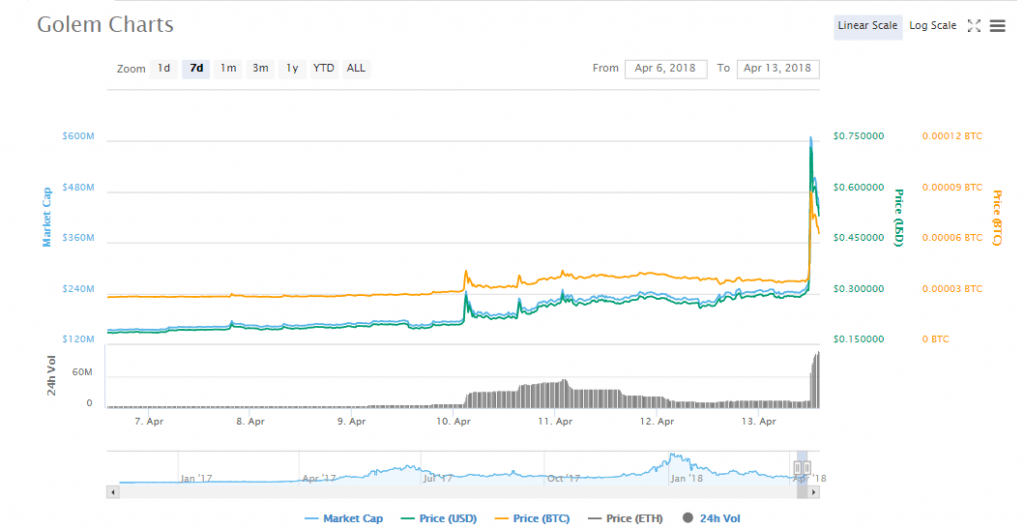
Each of our coin data pages has a graph that shows both the current and historic price information for the coin or token. Normally, the graph starts at the launch of the asset, but it is possible to select specific to and from dates to customize the chart to your own needs. These charts and their information are free to visitors of our website. The most experienced and professional traders often choose to use the best crypto API on the market. Our API enables millions of calls to track current prices and to also investigate historic prices and is used by some of the largest crypto exchanges and financial institutions in the world. CoinMarketCap also provides data about the most successful traders for you to monitor. We also provide data about the latest trending cryptos and trending DEX pairs.

At the time of writing, we estimate that there are more than 2 million pairs being traded, made up of coins, tokens and projects in the global coin market. As mentioned above, we have a due diligence process that we apply to new coins before they are listed. This process controls how many of the cryptocurrencies from the global market are represented on our site.

bitcoin cryptocurrency

Bitcoin cryptocurrency

Bitcoin uses the SHA-256 hashing algorithm to encrypt (hash) the data stored in the blocks on the blockchain. Simply put, transaction data stored in a block is encrypted into a 256-bit (64-digit) hexadecimal number. That number contains all the transaction data and information linked to the blocks before that block.

As with any new technology, it has been difficult to regulate Bitcoin. The U.S. administration seeks to impose regulations on cryptocurrency but, at the same time, walks a tightrope in trying not to throttle a growing and economically beneficial industry.

In the U.S., people generally use Bitcoin as an alternative investment, helping diversify a portfolio apart from stocks and bonds. You can also use Bitcoin to make purchases, but there are some vendors that accept the original crypto.

Many financial experts support their clients’ desire to buy cryptocurrency, but they don’t recommend it unless clients express interest. “The biggest concern for us is if someone wants to invest in crypto and the investment they choose doesn’t do well, and then all of a sudden they can’t send their kids to college,” says Ian Harvey, a certified financial planner (CFP) in New York City. “Then it wasn’t worth the risk.”

A blockchain is a distributed ledger, a shared database of information that is chained together via cryptographic techniques. “Distributed” means that it is stored on many computers rather than a centralized server location, as is typical of most data storage.

Cryptocurrency

With self-custody wallets, you are the sole party responsible for maintaining a record of your private keys, which are associated with a ‘seed phrase’. If you lose this seed phrase, there is no password recovery method to retrieve it.

Whether or not cryptocurrency is a security is a bit of a gray area right now. To back up a little, generally, a “security” in finance is anything that represents a value and can be traded. Stocks are securities because they represent ownership in a public company. Bonds are securities because they represent a debt owed to the bondholder. And both of these securities can be traded on public markets.

Regulators have increasingly signaled that cryptocurrencies should be regulated similarly to other securities, such as stocks and bonds. However, with the June 2024 Loper Bright Enterprises v. Raimondo Supreme Court ruling, that may change — Congress may have to clearly define crypto regulation through law making rather than allowing the SEC to enforce rules based on its interpretation. That could have major implications for the asset class in the future.

On 13 September 2018, Homero Josh Garza was sentenced to 21 months of imprisonment, followed by three years of supervised release. Garza had founded the cryptocurrency startups GAW Miners and ZenMiner in 2014, acknowledged in a plea agreement that the companies were part of a pyramid scheme, and pleaded guilty to wire fraud in 2015. The SEC separately brought a civil enforcement action in the US against Garza, who was eventually ordered to pay a judgment of $9.1 million plus $700,000 in interest. The SEC’s complaint stated that Garza, through his companies, had fraudulently sold “investment contracts representing shares in the profits they claimed would be generated” from mining.

top cryptocurrency

With self-custody wallets, you are the sole party responsible for maintaining a record of your private keys, which are associated with a ‘seed phrase’. If you lose this seed phrase, there is no password recovery method to retrieve it.

Whether or not cryptocurrency is a security is a bit of a gray area right now. To back up a little, generally, a “security” in finance is anything that represents a value and can be traded. Stocks are securities because they represent ownership in a public company. Bonds are securities because they represent a debt owed to the bondholder. And both of these securities can be traded on public markets.

Top cryptocurrency

Unlike other forms of cryptocurrency, Tether (USDT) is a stablecoin, meaning fiat currencies back it like U.S. dollars and the Euro and hypothetically keep a value equal to one of those denominations. In theory, this means Tether’s value is supposed to be more consistent than other cryptocurrencies, and it’s favored by investors who are wary of the extreme volatility of different coins. As of Dec. 10, 2024, the price of USDT is $1.00.

Parameters:• time_start: (optional) Timestamp (Unix or ISO 8601) to start returning quotes for. Example: 2024-01-01T00:00:00Z.• time_end: (optional) Timestamp (Unix or ISO 8601) to stop returning quotes for. Example: 2024-10-01T00:00:00Z.• interval: Interval of time to return data points for. Example: 1d, hourly, weekly, monthly.• count: (optional) The number of interval periods to return results for. Example: 100.• convert: (optional) Optionally calculate market quotes in up to 3 other fiat currencies or cryptocurrencies. Example: convert=USD,EUR,BTC.• convertid: (optional) Use CoinMarketCap IDs instead of symbols for conversions. Example: convertid=1,2781.Response Example:

• convert: (optional) Optionally calculate market quotes in up to 120 fiat or cryptocurrency symbols. Example: convert=BTC,USD.• convertid: (optional) Use CoinMarketCap IDs instead of symbols for conversions. Example: convertid=1,2781.Response Example: , “status”: }

Wir erhalten aktualisierte Kryptowährungs-Preise direkt von verschiedenen Börsen basierend auf dem jeweiligen Währungspaar. Wir konvertieren die Zahlen dann in USD. Eine detaillierte Erläuterung findest Du hier.

Created in 2013, DOGE was launched as a parody of bitcoin. But dogecoin investors are dead serious about its prospects today. DOGE has become one of the most popular meme coins with several high-profile supporters.

what is cryptocurrency

What is cryptocurrency

Ethereum uses the same underlying technology as Bitcoin, but instead of strictly peer-to-peer payments, the cryptocurrency is used to pay for transactions on the Ethereum network warm springs oregon casino. This network, built on the Ethereum blockchain, enables entire financial ecosystems to operate without a central authority. To visualize this, think insurance without the insurance company, or real estate titling without the title company.

The onboarding process is smooth and quick. You don’t have to jump in with large amounts, either. You could start with as little as 15 dollars! So, what is some mind candy that you should be looking into related to crypto investing?

A cryptocurrency is just like a digital form of cash. You can use it to pay friends for your share of the bar tab, buy that new pair of socks you’ve been eyeing up 👀, or book flights ✈️ and hotels 🏨 for your next holiday. Because cryptocurrency is digital, it can also be sent to friends and family anywhere in the world.

Cryptocurrency prices

Ethereum’s principal innovation was designing a platform that allowed it to execute smart contracts using the blockchain, which further reinforces the already existing benefits of smart contract technology. Ethereum’s blockchain was designed, according to co-founder Gavin Wood, as a sort of “one computer for the entire planet,” theoretically able to make any program more robust, censorship-resistant and less prone to fraud by running it on a globally distributed network of public nodes.

With a blockchain, it’s possible for participants from across the world to verify and agree on the current state of the ledger. Blockchain was invented by Satoshi Nakamoto for the purposes of Bitcoin. Other developers have expanded upon Satoshi Nakamoto’s idea and created new types of blockchains – in fact, blockchains also have several uses outside of cryptocurrencies.

This API is available on the following plans:• Basic• Hobbyist (1 month)• Startup (1 month)• Standard (3 months)• Professional (12 months)• Enterprise (Up to 6 years)Explore the plans and their features on the CoinMarketCap API pricing page.

A blockchain is a type of distributed ledger that is useful for recording the transactions and balances of different participants. All transactions are stored in blocks, which are generated periodically and linked together with cryptographic methods. Once a block is added to the blockchain, data contained within it cannot be changed, unless all subsequent blocks are changed as well.

Ethereum has pioneered the concept of a blockchain smart contract platform. Smart contracts are computer programs that automatically execute the actions necessary to fulfill an agreement between several parties on the internet. They were designed to reduce the need for trusted intermediates between contractors, thus reducing transaction costs while also increasing transaction reliability.

With EIP-1559, this process is handled by an automated bidding system, and there is a set “base fee” for transactions to be included in the next block. This fee varies based on how congested the network is. Furthermore, users who wish to speed up their transactions can pay a “priority fee” to a miner for faster inclusion.

what is cryptocurrency

What is cryptocurrency

In April 2021, Swiss insurer AXA announced that it had begun accepting Bitcoin as a mode of payment for all its lines of insurance except life insurance (due to regulatory issues). Premier Shield Insurance, which sells home and auto insurance policies in the US, also accepts Bitcoin for premium payments.

Neither Atomic Invest nor Atomic Brokerage, nor any of their affiliates is a bank. Investments in securities are Not FDIC insured, Not Bank Guaranteed, and May Lose Value. Investing involves risk, including the possible loss of principal. Before investing, consider your investment objectives and the fees and expenses charged.

Mining cryptocurrency is generally only possible for a proof-of-stake cryptocurrency such as Bitcoin. And before you get too far, it is worth noting that the barriers to entry can be high and the probability of success relatively low without major investment.

Crypto purchases with credit cards are considered risky, and some exchanges don’t support them. Some credit card companies don’t allow crypto transactions either. This is because cryptocurrencies are highly volatile, and it is not advisable to risk going into debt — or potentially paying high credit card transaction fees — for certain assets.

For lucky miners, the Bitcoin rewards are more than enough to offset the costs involved. But the huge upfront cost is also a way to discourage dishonest players. If you win the right to create a block, it might not be worth the risk of tampering with the records and having your submission thrown out — forfeiting the reward. In this instance, spending the money on energy costs in an attempt to tamper with the historical record would have resulted in significant loss.