
Artificial intelligence companies
Another type of local search is evolutionary computation, which aims to iteratively improve a set of candidate solutions by “mutating” and “recombining” them, selecting only the fittest to survive each generation https://www.tech-wonders.com/2024/12/how-ai-transforms-sales-efficiency-and-success.html.
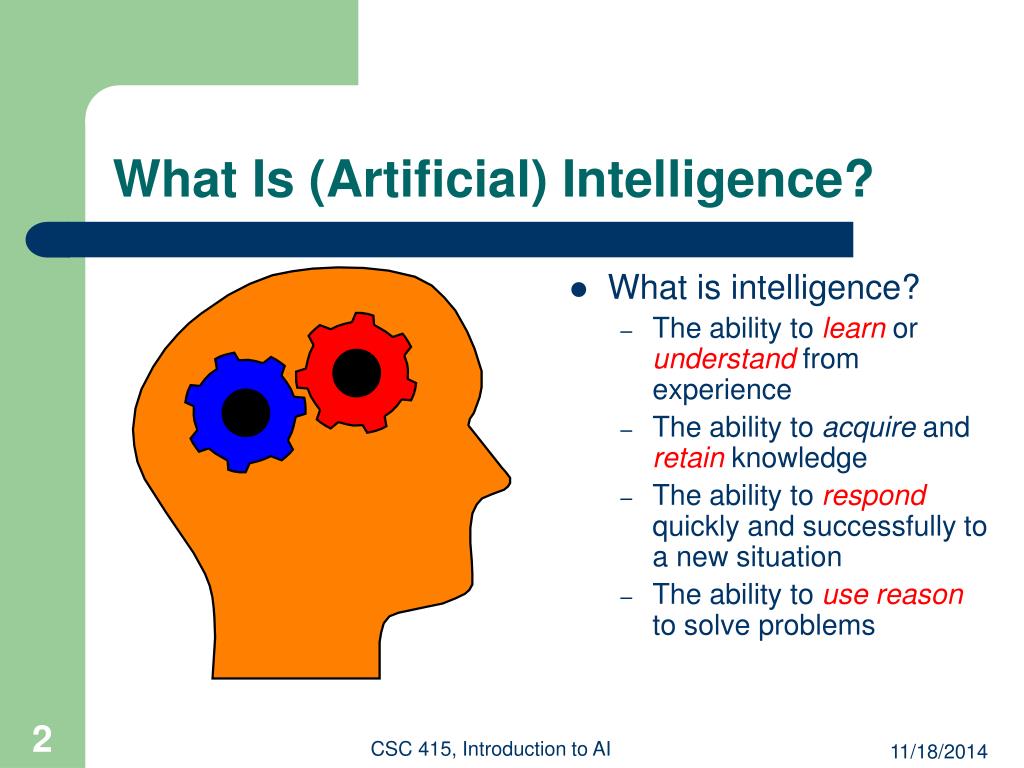
Psychologists generally characterize human intelligence not by just one trait but by the combination of many diverse abilities. Research in AI has focused chiefly on the following components of intelligence: learning, reasoning, problem solving, perception, and using language.
Artificial intelligence is used in astronomy to analyze increasing amounts of available data and applications, mainly for “classification, regression, clustering, forecasting, generation, discovery, and the development of new scientific insights.” For example, it is used for discovering exoplanets, forecasting solar activity, and distinguishing between signals and instrumental effects in gravitational wave astronomy. Additionally, it could be used for activities in space, such as space exploration, including the analysis of data from space missions, real-time science decisions of spacecraft, space debris avoidance, and more autonomous operation.
Artificial intelligence definition
Alternatively, dedicated models for mathematical problem solving with higher precision for the outcome including proof of theorems have been developed such as Alpha Tensor, Alpha Geometry and Alpha Proof all from Google DeepMind, Llemma from eleuther or Julius.
Alternatively, dedicated models for mathematical problem solving with higher precision for the outcome including proof of theorems have been developed such as Alpha Tensor, Alpha Geometry and Alpha Proof all from Google DeepMind, Llemma from eleuther or Julius.
AI has potential benefits and potential risks. AI may be able to advance science and find solutions for serious problems: Demis Hassabis of DeepMind hopes to “solve intelligence, and then use that to solve everything else”. However, as the use of AI has become widespread, several unintended consequences and risks have been identified. In-production systems can sometimes not factor ethics and bias into their AI training processes, especially when the AI algorithms are inherently unexplainable in deep learning.
Criticism of COMPAS highlighted that machine learning models are designed to make “predictions” that are only valid if we assume that the future will resemble the past. If they are trained on data that includes the results of racist decisions in the past, machine learning models must predict that racist decisions will be made in the future. If an application then uses these predictions as recommendations, some of these “recommendations” will likely be racist. Thus, machine learning is not well suited to help make decisions in areas where there is hope that the future will be better than the past. It is descriptive rather than prescriptive.
Affective computing is an interdisciplinary umbrella that comprises systems that recognize, interpret, process, or simulate human feeling, emotion, and mood. For example, some virtual assistants are programmed to speak conversationally or even to banter humorously; it makes them appear more sensitive to the emotional dynamics of human interaction, or to otherwise facilitate human–computer interaction.
There many other ways that AI is expected to help bad actors, some of which can not be foreseen. For example, machine-learning AI is able to design tens of thousands of toxic molecules in a matter of hours.
Artificial intelligence movie
Locations might be the obvious way to make your film look substantial, but they’re far from the only natural resource. Consider artist friends you want to collaborate with and write toward their particular talents. Just as the cabin setting helped decide what type of movie I would make, actors I knew gave the film a similar preordained shape. The original lead actress is wildly charming, so I could write a tough cookie of a character that she would make more palatable for audiences. And our original lead actor is a fantastically talented musician, so it was a natural choice for his character to play guitar.
AI movies often serve as a reflection of society’s current fears, beliefs, and values. These films use artificial intelligence as a lens through which to explore complex social issues, such as technology’s impact on humanity, the ethical implications of AI, and the consequences of creating intelligent machines.
I hope you’ve found something interesting to watch this evening. And if you want to learn more about AI in the real world, feel free to subscribe to InsideAI, our monthly newsletter about artificial intelligence.
7-year-old Bai Jia gets too close to the virtual version of her mother (Tang Wei), who died of a terminal disease. Flight attendant Gu Jung-in (Bae Suzy) has trouble adapting to life with her boyfriend, Park Tae-ju (Park Bo Gum), after having spent days with his virtual version while he was in a comatose state. Does all this look like peace? ‘Wonderland’ is an effectively executed reminder that the significance of life incorporates death, too, and it is important to accept the truth and not live in a lie. You can watch the film here.
Artificial intelligence general
More than just a creative mind, painting cats wearing different Chinese dress patterns requires an understanding of different cultures, symbols, and belief systems. AGI systems would need to handle the subtle nuances of each ethnic group and create a new structure for this task using multiple algorithms at once.
Others argue for an “embodied” AGI that can handle real physical tasks. For example, Apple co-founder Steve Wozniak has set as one of the key tests of computer intelligence literally making a cup of coffee. “When is a computer ever going to get to that level,” he asked in 2010. That challenge is not achievable yet with today’s AI-driven robotics systems.
Examples such as these will pave the way for a rise in positions such as chief AI officer, chief AI compliance officer, and so on. With the rapid adoption of AI/ML, such instances are expected to rise in the near future.
Artificial general intelligence (AGI) is a type of artificial intelligence (AI) that matches or surpasses human cognitive capabilities across a wide range of cognitive tasks. This contrasts with narrow AI, which is limited to specific tasks. Artificial superintelligence (ASI), on the other hand, refers to AGI that greatly exceeds human cognitive capabilities. AGI is considered one of the definitions of strong AI.
As lead author Meredith Ringel Morris and team relate, some thinkers limit AGI to “cognitive” tasks, which means, non-physical goals, so that an AGI program would not have to, for example, be able to move like a person through the physical world. That definition would leave robotics out of the equation.