
What is cryptocurrency
With PayPal’s recent stablecoin announcement, scammers are attempting to capitalize on the hype by releasing counterfeit PYUSD tokens on various blockchains. This serves as a cautionary tale for investors to exercise due diligence and verify the authenticity of tokens before making any transactions https://usa-review-casino.com/bonus-codes/diamond-club-vip/.
Creating such a stockpile would also be a “giant step in the direction of bitcoin becoming normalized, becoming legitimatized in the eyes of people who don’t yet see it as legitimate,” said Zack Shapiro, an attorney who is head of policy at the Bitcoin Policy Institute.
Prominent figures in the crypto space, Ark Invest CEO Cathie Wood and Galaxy Digital CEO Mike Novogratz, have expressed optimism regarding the approval of a spot bitcoin ETF by the SEC. With several applications pending, the crypto community eagerly awaits a positive decision, which could further legitimize and boost the adoption of cryptocurrencies
Mainnets like Ethereum’s aren’t suitable for major (AAA) game development. The only real solution is a horizontally scalable blockchain coupled with modularity and a gas-free experience for end-users, says Jack O’Holleran, CEO of SKALE Labs.
Cryptocurrency
Bitcoin was initially developed primarily to be a form of payment that isn’t controlled or distributed by a central bank. While financial institutions have traditionally been necessary to verify that a payment has been processed successfully, Bitcoin accomplishes this securely, without that central authority.
However, it’s important to note that to some, cryptocurrencies aren’t investments at all. Bitcoin enthusiasts, for example, hail it as a much-improved monetary system over our current one and would prefer we spend and accept it as everyday payment. One common refrain — “one Bitcoin is one Bitcoin” — underscores the view that Bitcoin shouldn’t be measured in USD, but rather by the value it brings as a new monetary system.
Popular cryptocurrencies like Bitcoin, Ethereum, and Tether showcase the diverse applications of this technology, from peer-to-peer payments to supporting decentralized applications and stablecoins. As cryptocurrency continues to evolve, it brings both exciting opportunities and challenges, particularly in terms of regulation, security, and adoption across various sectors.
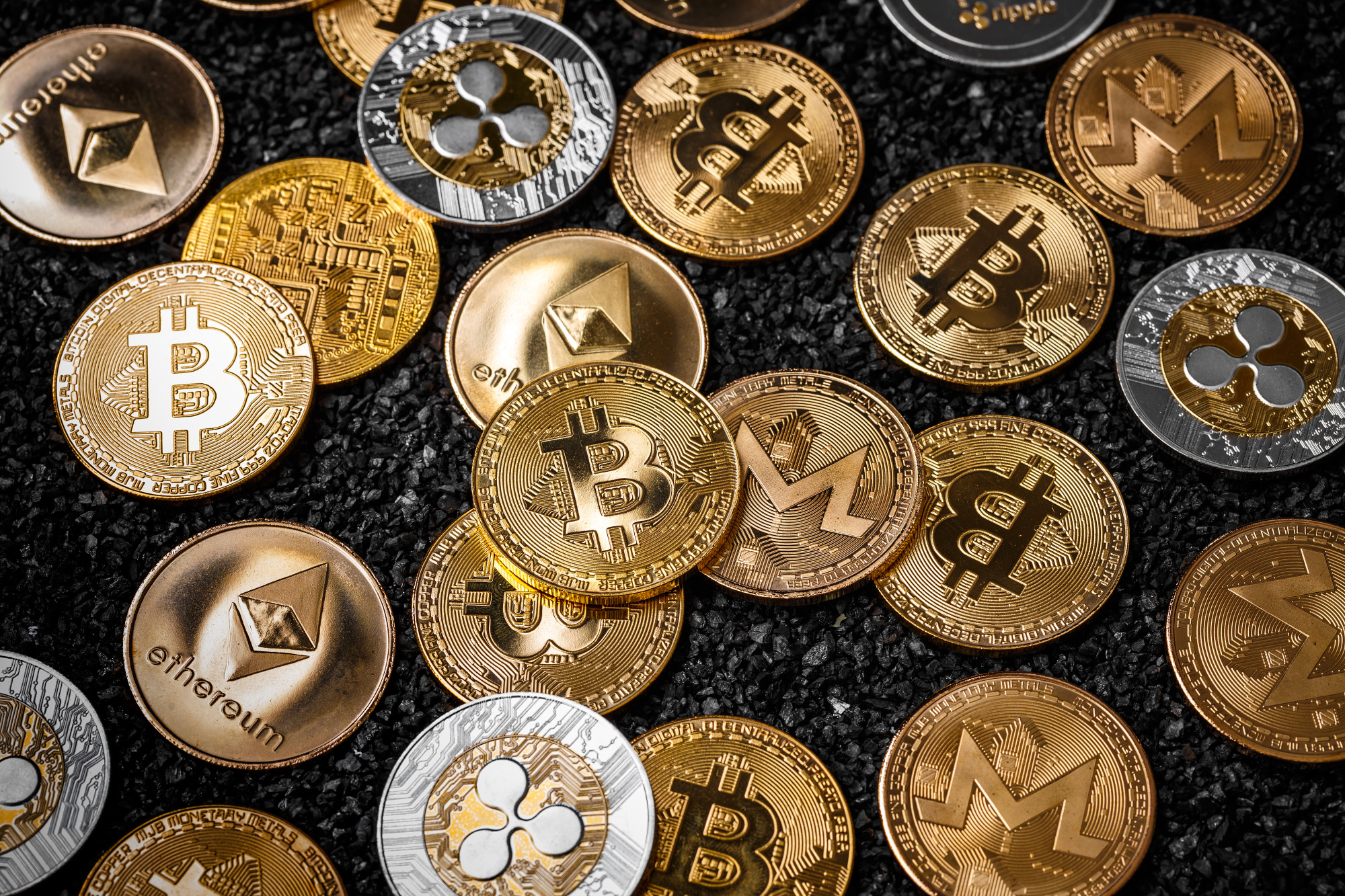
Bitcoin was initially developed primarily to be a form of payment that isn’t controlled or distributed by a central bank. While financial institutions have traditionally been necessary to verify that a payment has been processed successfully, Bitcoin accomplishes this securely, without that central authority.
However, it’s important to note that to some, cryptocurrencies aren’t investments at all. Bitcoin enthusiasts, for example, hail it as a much-improved monetary system over our current one and would prefer we spend and accept it as everyday payment. One common refrain — “one Bitcoin is one Bitcoin” — underscores the view that Bitcoin shouldn’t be measured in USD, but rather by the value it brings as a new monetary system.
Popular cryptocurrencies like Bitcoin, Ethereum, and Tether showcase the diverse applications of this technology, from peer-to-peer payments to supporting decentralized applications and stablecoins. As cryptocurrency continues to evolve, it brings both exciting opportunities and challenges, particularly in terms of regulation, security, and adoption across various sectors.
Cryptocurrency regulation
In November 2024, 18 states and a blockchain industry association filed a lawsuit against the SEC in the Eastern District of Kentucky, challenging the agency’s authority to regulate digital asset trading platforms as securities exchanges. The case, which remains in its initial stages, challenges the SEC’s assertion of regulatory authority over digital asset trading platforms, arguing that the agency’s approach improperly preempts state money transmitter laws and interferes with state unclaimed property regimes that many states have specifically adapted for digital assets.
A lot of the issues come down to whether crypto is classed as a security or not. This debate precedes the recent collapse of FTX and CEO Sam Bankman-Fried being charged by the SEC for defrauding investors of more than $1.8 billion.
The outcome of the litigation could have far-reaching implications for how digital asset futures products are regulated and traded in the United States. A ruling in Bitnomial’s favor would reinforce the CFTC’s exclusive jurisdiction over non-security futures products and potentially clear the way for other futures exchanges to list similar products. Conversely, if the SEC prevails, it could effectively prevent the listing of futures contracts on many digital assets, as the vast majority of digital assets are not registered as a security with the SEC and cannot be registered by the exchanges seeking to list futures on them. As cases are litigated across jurisdictions, there is also the possibility of a split in how federal circuits view secondary transfers of digital assets.
Cryptocurrency prices
IEO stands for Initial Exchange Offering. IEOs share a lot of similarities with ICOs. They are both largely unregulated token sales, with the main difference being that ICOs are conducted by the projects that are selling the tokens, while IEOs are conducted through cryptocurrency exchanges. Cryptocurrency exchanges have an incentive to screen projects before they conduct a token sale for them, so the quality of IEOs tends to be better on average than the quality of ICOs.
A cryptocurrency’s market cap increases when its price per unit increases. Alternatively, an increase in circulating supply can also lead to an increase in market cap. However, an increase in supply also tends to lead to a lower price per unit, and the two cancel each other out to a large extent. In practice, an increase in price per unit is the main way in which a cryptocurrency’s market cap grows.
Properly understanding the cryptocurrency market can be complex and take time, so that is why we make it simpler by focusing on key metrics like prices, market caps, and volume. For both beginners and seasoned investors, the price action is an essential indicator of the market’s overall health and activity. By aggregating data from top exchanges, COIN360 provides a detailed snapshot of the market caps, price movements, and trading volumes of over 5000 tokens.
A stablecoin is a crypto asset that maintains a stable value regardless of market conditions. This is most commonly achieved by pegging the stablecoin to a specific fiat currency such as the US dollar. Stablecoins are useful because they can still be transacted on blockchain networks while avoiding the price volatility of “normal” cryptocurrencies such as Bitcoin and Ethereum. Outside of stablecoins, cryptocurrency prices can change rapidly, and it’s not uncommon to see the crypto market gain or lose more than 10% in a single day.
A distributed ledger is a database with no central administrator that is maintained by a network of nodes. In permissionless distributed ledgers, anyone is able to join the network and operate a node. In permissioned distributed ledgers, the ability to operate a node is reserved for a pre-approved group of entities.