
Artificial intelligence general
Philosophical debates have historically sought to determine the nature of intelligence and how to make intelligent machines. Another major focus has been whether machines can be conscious, and the associated ethical implications ai sales outreach. Many other topics in philosophy are relevant to AI, such as epistemology and free will. Rapid advancements have intensified public discussions on the philosophy and ethics of AI.
Artificial intelligence (AI), in its broadest sense, is intelligence exhibited by machines, particularly computer systems. It is a field of research in computer science that develops and studies methods and software that enable machines to perceive their environment and use learning and intelligence to take actions that maximize their chances of achieving defined goals. Such machines may be called AIs.
It involves the creation of intelligent machines that can perceive the world around them, understand natural language, and adapt to changing circumstances. While AI may still feel like science fiction to some, it’s all around us, shaping how we interact with technology and transforming industries such as healthcare, finance, and entertainment.
In this article, we will dive deep into the world of AI, explaining what it is, what types are available today and on the horizon, share artificial intelligence examples, and how you can get online AI training to join this exciting field. Let’s get started.
Computer vision is a field of AI that focuses on teaching machines how to interpret the visual world. By analyzing visual information such as camera images and videos using deep learning models, computer vision systems can learn to identify and classify objects and make decisions based on those analyses.
Artificial intelligence technology
Most cutting-edge research today involves deep learning, which refers to using very large neural networks with many layers of artificial neurons. The idea has been around since the 1980s — but the massive data and computational requirements limited applications. Then in 2012, researchers discovered that specialized computer chips known as graphics processing units (GPUs) speed up deep learning. Deep learning has since been the gold standard in research.
Much progress has been made in the past two decades, but there’s plenty to work on. Despite the flurry of recent progress in AI and wild prognostications about its near future, there are still many things that machines can’t do, such as understanding the nuances of language, commonsense reasoning, and learning new skills from just one or two examples.
These algorithms learn from real-world driving, traffic and map data to make informed decisions about when to brake, turn and accelerate; how to stay in a given lane; and how to avoid unexpected obstructions, including pedestrians. Although the technology has advanced considerably in recent years, the ultimate goal of an autonomous vehicle that can fully replace a human driver has yet to be achieved.
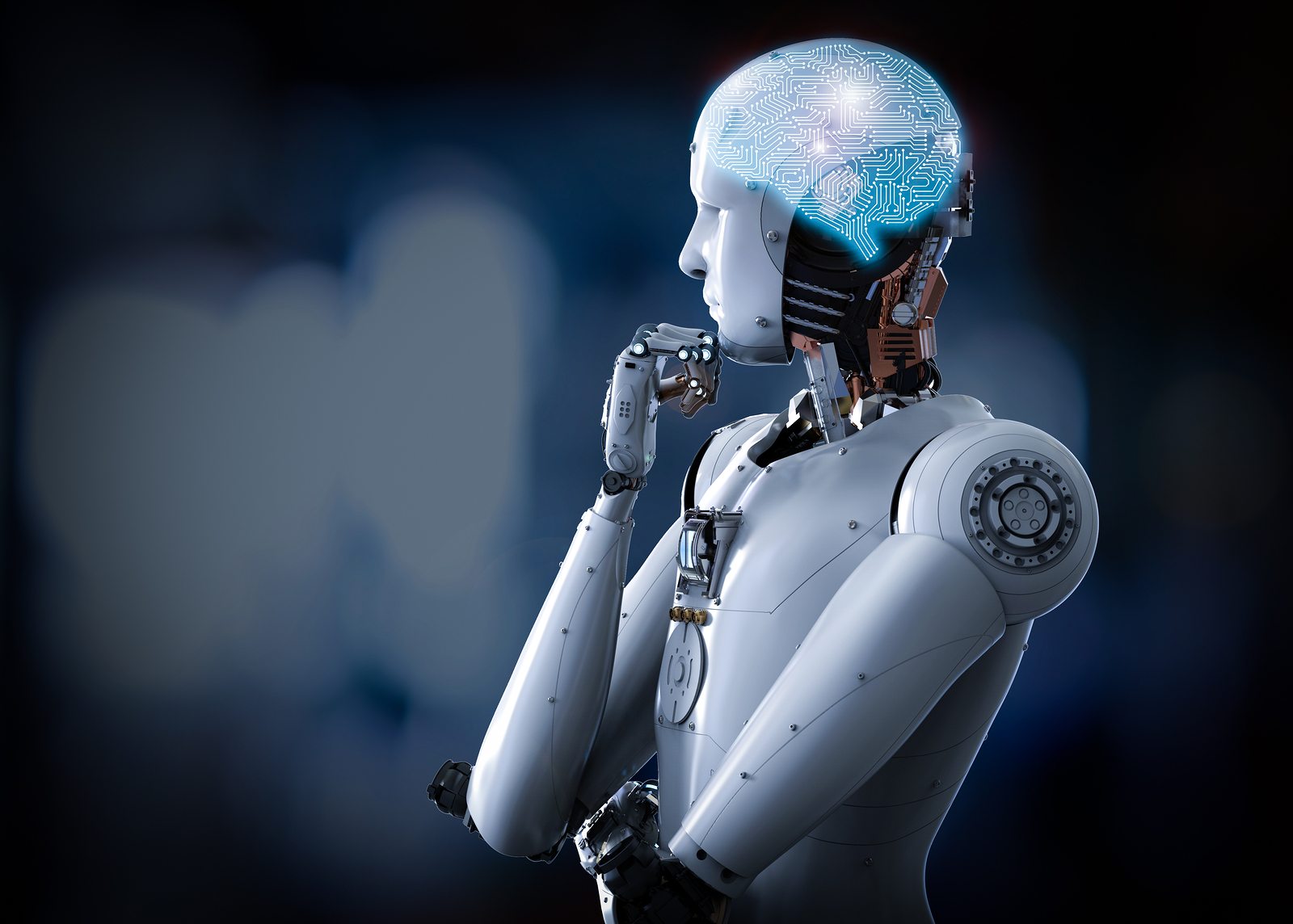
Most cutting-edge research today involves deep learning, which refers to using very large neural networks with many layers of artificial neurons. The idea has been around since the 1980s — but the massive data and computational requirements limited applications. Then in 2012, researchers discovered that specialized computer chips known as graphics processing units (GPUs) speed up deep learning. Deep learning has since been the gold standard in research.
Much progress has been made in the past two decades, but there’s plenty to work on. Despite the flurry of recent progress in AI and wild prognostications about its near future, there are still many things that machines can’t do, such as understanding the nuances of language, commonsense reasoning, and learning new skills from just one or two examples.
Artificial intelligence general
“AGI doesn’t exist today in the way we think about it,” Wayne Chang, cofounder of Digits, told Built In. “However, the speed of innovation towards AGI is accelerating. In its ideal state, AGI would perform tasks that are identical to or surpass those that a human would perform.”
1. Bias and Fairness: General AI systems can inadvertently perpetuate biases present in their training data. Designers must ensure these systems are trained on diverse and representative datasets so that they don’t reinforce societal biases.
Steps taken to monitor weak AI could open the door for more robust AI policies that can better prepare society for AGI and even more intelligent forms of AI. Governments and societies may then want to take proactive measures to ensure AI organizations prioritize the common good, so people can enjoy the benevolent aspects of self-aware AI and a higher quality of life.

“AGI doesn’t exist today in the way we think about it,” Wayne Chang, cofounder of Digits, told Built In. “However, the speed of innovation towards AGI is accelerating. In its ideal state, AGI would perform tasks that are identical to or surpass those that a human would perform.”
1. Bias and Fairness: General AI systems can inadvertently perpetuate biases present in their training data. Designers must ensure these systems are trained on diverse and representative datasets so that they don’t reinforce societal biases.
Steps taken to monitor weak AI could open the door for more robust AI policies that can better prepare society for AGI and even more intelligent forms of AI. Governments and societies may then want to take proactive measures to ensure AI organizations prioritize the common good, so people can enjoy the benevolent aspects of self-aware AI and a higher quality of life.