
- All about cryptocurrency trading
- Learn all about cryptocurrency
- Everything i need to know about cryptocurrency
What is cryptocurrency
In proof-of-work (PoW) networks, crypto ‘miners’ from around the world race to solve a mathematical equation. This math problem helps to secure a blockchain network. The miner that solves this math problem first is able to validate and verify all the transactions within the latest block https://online-casinoaustralia.org/reviews/rocketplay-casino/. They are rewarded in the ‘fees’ that users attach to their orders to have their transaction validated (it is not free!), and a network reward.
Regulators have increasingly signaled that cryptocurrencies should be regulated similarly to other securities, such as stocks and bonds. However, with the June 2024 Loper Bright Enterprises v. Raimondo Supreme Court ruling, that may change — Congress may have to clearly define crypto regulation through law making rather than allowing the SEC to enforce rules based on its interpretation. That could have major implications for the asset class in the future.
USD Coin (USDC) is a stablecoin pegged to the US dollar on a 1:1 basis, ensuring that each USDC is backed by one US dollar held in reserve. USDC aims to provide a stable, secure, and transparent digital dollar, leveraging blockchain technology to offer the advantages of fast, low-cost transactions while maintaining price stability. It is widely used in the DeFi ecosystem, for remittances, and as a stable store of value, making it a popular choice for individuals and businesses looking to leverage the benefits of cryptocurrency without the associated volatility.
Cryptocurrencies like Bitcoin (BTC) and Ethereum (ETH) represent a form of digital currency that does not rely upon intermediaries like banks to verify transactions. Instead, cryptocurrencies are created and maintained on distributed ledgers, or blockchains.
All about cryptocurrency trading
Exchanges will charge you a fee for doing this, which normally costs around 0.1% for each trade. Cryptocurrency trading is now really popular, with billions of dollar’s worth of coins being bought and sold every day.
To ensure the highest level of accuracy & most up-to-date information, BitDegree.org is regularly audited & fact-checked by following strict editorial guidelines & review methodology. Carefully selected industry experts contribute their real-life experience & expertise to BitDegree’s content. Our extensive Web3 Expert Network is compiled of professionals from leading companies, research organizations and academia.
Yes, cryptocurrency investments are subject to taxation in most countries. It is important to consult with a tax professional to understand the tax obligations related to your cryptocurrency investments.
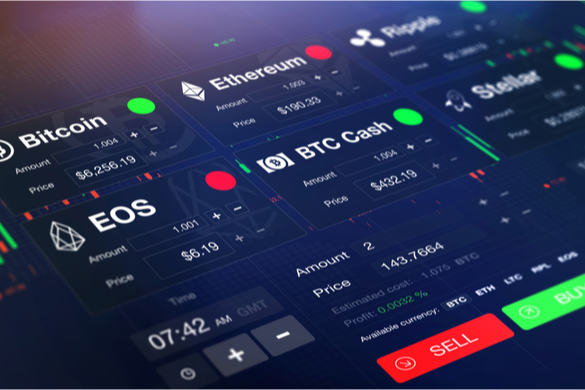
Exchanges will charge you a fee for doing this, which normally costs around 0.1% for each trade. Cryptocurrency trading is now really popular, with billions of dollar’s worth of coins being bought and sold every day.
To ensure the highest level of accuracy & most up-to-date information, BitDegree.org is regularly audited & fact-checked by following strict editorial guidelines & review methodology. Carefully selected industry experts contribute their real-life experience & expertise to BitDegree’s content. Our extensive Web3 Expert Network is compiled of professionals from leading companies, research organizations and academia.
Yes, cryptocurrency investments are subject to taxation in most countries. It is important to consult with a tax professional to understand the tax obligations related to your cryptocurrency investments.
Learn all about cryptocurrency
This platform’s engaging social features and vibrant community appeal to those who enjoy communal trading experiences. However, for those seeking a cost-effective crypto exchange, eToro’s high trading fees might be excessive.
Did you know that those currently or planning to provide services surrounding cryptocurrency may need a money transmitter license based on state or federal rules? These coins are regulated and are the real deal. Cryptocurrency coins can be further categorized into groups based on their use cases.
By leveraging these tools and indicators, investors can gain a deeper understanding of cryptocurrency trends, identify potential opportunities, and make more informed decisions in this dynamic and evolving market.
Everything i need to know about cryptocurrency
For beginning investors, it can also be worthwhile to examine how widely a cryptocurrency is being used. Most reputable crypto projects have publicly available metrics showing data such as how many transactions are being carried out on their platforms. If use of a cryptocurrency is growing, that may be a sign that it is establishing itself in the market. Cryptocurrencies also generally make “white papers” available to explain how they’ll work and how they intend to distribute tokens.
However, it’s important to note that to some, cryptocurrencies aren’t investments at all. Bitcoin enthusiasts, for example, hail it as a much-improved monetary system over our current one and would prefer we spend and accept it as everyday payment. One common refrain — “one Bitcoin is one Bitcoin” — underscores the view that Bitcoin shouldn’t be measured in USD, but rather by the value it brings as a new monetary system.
Created by the pseudonymous Satoshi Nakatomo, Bitcoin (BTC) was the first cryptocurrency and is also the most popular. Since its creation in 2008, Bitcoin has gone from being worthless to being valued at tens of thousands of dollars per coin. At the time this post was written, the price per coin was nearly $30,000 USD or $37,500 CAD.
Digital currencies are typically the category of digital assets that comes to mind when someone utters the term “cryptocurrency”. As the name suggests, the purpose of digital currencies is to make transactions in the digital world quicker, more reliable and more secure. Digital currencies are optimized for high throughput (often measured in “transactions per second”, often shortened to “TPS”) and characterized by low to no transaction costs.
Yes. Since cryptocurrencies are decentralized and not reliant upon banking hours, crypto can be traded around the clock. However, most online brokerages and some exchanges have trading hours. For example, IG is only open for trading from 8:00 Saturday to 22:00 Friday. That means you can’t trade crypto for ten hours between 10pm Friday night through 8am Saturday morning.