
All about cryptocurrency
Determine your goals for trading. Read the market, choose an analysis method, and learn as much as possible before entering a trade. Sometimes, understanding your risks in crypto trading is the best way to manage them lupin casino no deposit bonus. General tips for managing risks in cryptocurrency trading include the following:
To trade cryptocurrency, you first need to obtain cryptocurrency. The platform you use will depend on the type of crypto you want to trade. Once you find an exchange that handles your currency, you’ll open an account, transfer funds to your crypto wallet, and make your purchase. Using whatever trading strategy you choose, you sell the cryptocurrency when the market is in your favor.
Don’t get me wrong, I’m not calling anyone dumb. I’m just saying that if you don’t possess a certain skillset, then you shouldn’t get involved in that area. This could cause you to lose a lot of money, very quickly.
All about cryptocurrency
Many banks do not offer virtual currency services themselves and can refuse to do business with virtual currency companies. In 2014, Gareth Murphy, a senior banking officer, suggested that the widespread adoption of cryptocurrencies may lead to too much money being obfuscated, blinding economists who would use such information to better steer the economy. While traditional financial products have strong consumer protections in place, there is no intermediary with the power to limit consumer losses if bitcoins are lost or stolen. One of the features cryptocurrency lacks in comparison to credit cards, for example, is consumer protection against fraud, such as chargebacks.
Cryptocurrencies have attracted a reputation as unstable investments due to high investor losses from scams, hacks, bugs, and volatility. Although the underlying cryptography and blockchain are generally secure, the technical complexity of using and storing crypto assets can be a significant hazard to new users.
However, it’s important to note that to some, cryptocurrencies aren’t investments at all. Bitcoin enthusiasts, for example, hail it as a much-improved monetary system over our current one and would prefer we spend and accept it as everyday payment. One common refrain — “one Bitcoin is one Bitcoin” — underscores the view that Bitcoin shouldn’t be measured in USD, but rather by the value it brings as a new monetary system.
If you buy cryptocurrency, you have to store it. You can keep it on an exchange or in a digital wallet. While there are different kinds of wallets, each has its benefits, technical requirements, and security. As with exchanges, you should investigate your storage choices before investing.
Cryptocurrencies are digital assets that are secured by cryptography. As a relatively new technology, they are highly speculative, and it is important to understand the risks involved before investing.
And that led to another of Savage’s rules: Buy cryptocurrency on a legitimate crypto exchange like Coinbase or Kraken, or through an ATM that sells it — though ATM fees to do so are steep. (Coinbase isn’t that machine in supermarkets where you exchange your loose change for bills, I joked on the podcast; that’s Coinstar.)
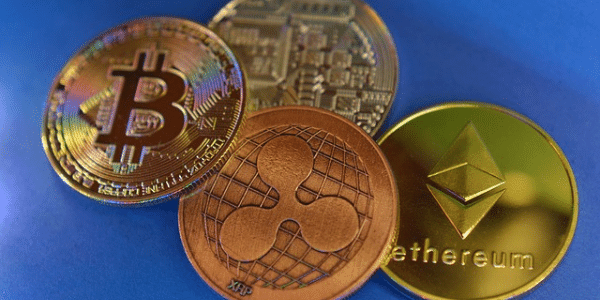
What is cryptocurrency
In April 2021, Swiss insurer AXA announced that it had begun accepting Bitcoin as a mode of payment for all its lines of insurance except life insurance (due to regulatory issues). Premier Shield Insurance, which sells home and auto insurance policies in the US, also accepts Bitcoin for premium payments.
We value your trust. Our mission is to provide readers with accurate and unbiased information, and we have editorial standards in place to ensure that happens. Our editors and reporters thoroughly fact-check editorial content to ensure the information you’re reading is accurate. We maintain a firewall between our advertisers and our editorial team. Our editorial team does not receive direct compensation from our advertisers.
Decentralized finance (DeFi) applications are secure, blockchain-based platforms that enable peer-to-peer financial transactions without intermediaries. DeFi allows individuals to send, receive, and spend digital currency without relying on traditional financial institutions.
A paper by John Griffin, a finance professor at the University of Texas, and Amin Shams, a graduate student found that in 2017 the price of bitcoin had been substantially inflated using another cryptocurrency, Tether.
Among the first altcoins was Litecoin, which aimed to become the silver to Bitcoin’s gold. As of 2022, the number of cryptocurrencies had soared to more than 19,000, although many of these were not expected to survive.