
Cryptocurrency
The two major categories of cryptocurrencies are Proof-of-Work and Proof-of-Stake. Proof-of-Work coins use mining, while Proof-of-Stake coins use staking to achieve consensus about the state of the ledger Borgata Sportsbook Pennsylvania.
A blockchain is a type of distributed ledger that is useful for recording the transactions and balances of different participants. All transactions are stored in blocks, which are generated periodically and linked together with cryptographic methods. Once a block is added to the blockchain, data contained within it cannot be changed, unless all subsequent blocks are changed as well.
The top 10 cryptocurrencies are ranked by their market capitalization. Even though 10 is an arbitrarily selected number, being in the top 10 by market capitalization is a sign that the cryptocurrency enjoys a lot of relevance in the crypto market. The crypto top 10 changes frequently because of the high volatility of crypto prices. Despite this, Bitcoin and Ethereum have been ranked #1 and #2, respectively, for several years now.
One of the biggest winners is Axie Infinity — a Pokémon-inspired game where players collect Axies (NFTs of digital pets), breed and battle them against other players to earn Smooth Love Potion (SLP) — the in-game reward token. This game was extremely popular in developing countries like The Philippines, due to the level of income they could earn. Players in the Philippines can check the price of SLP to PHP today directly on CoinMarketCap.
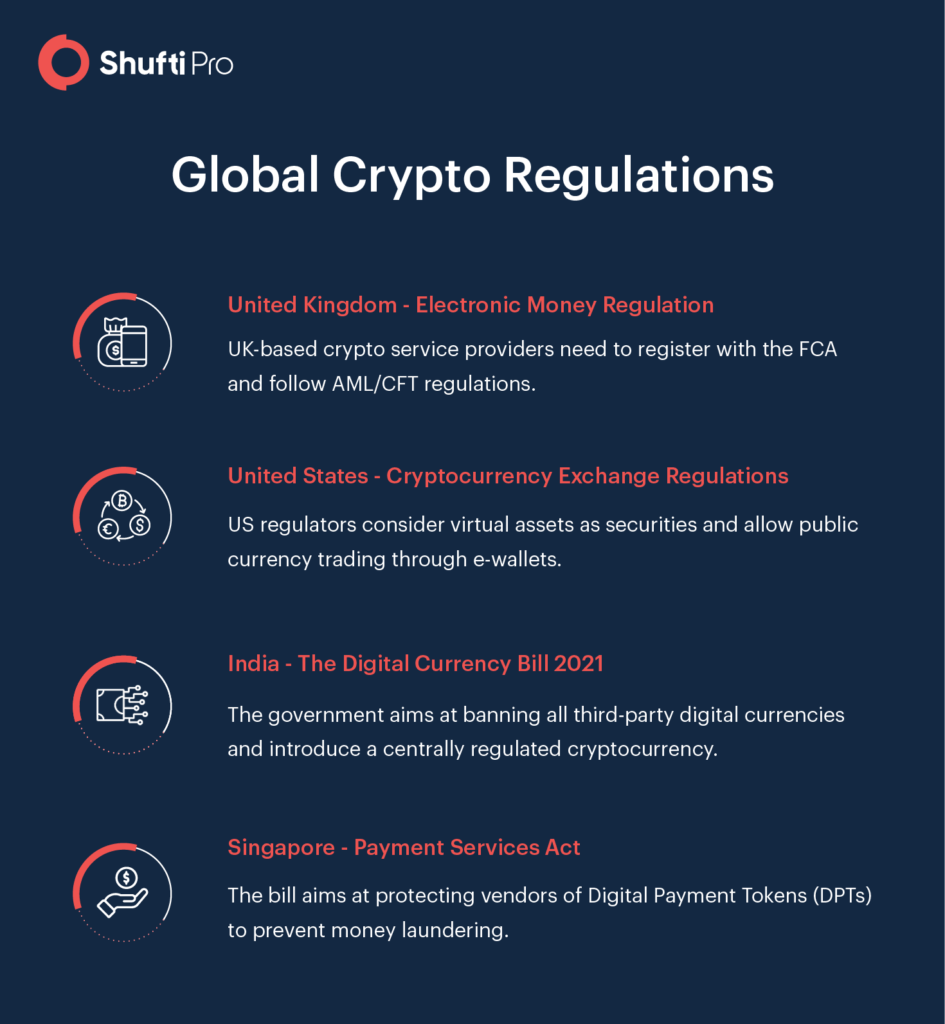
Cryptocurrency regulation
WV Code § 32A-2-1 broadly defines both currency transmission and money transmission as “engaging in the business of…receiving currency, the payment of money, or other value that substitutes for money by any means for the purpose of transmitting,” which seems to include cryptocurrency. WV Code § 32A-2-2 states that “a person may not engage in the business of currency exchange, transportation or transmission in this state without a license.” WV Code § 31A-8G-1 creates the West Virginia Fintech Regulatory Sandbox Program. According to WV Code § 31A-8G-4, a licensee of this Sandbox “is not subject to state laws that regulate financial products or services.” WV Code § 61-15-1 explicitly includes cryptocurrency under the definition of monetary instruments which are banned from being used to launder value. On March 26, 2022, Governor Jim Justice signed HB 4511, which amends the Unclaimed Property Act to include provisions for the treatment of virtual currency.
While the statement does not prohibit banks from providing crypto services, it does state that “issuing or holding as principal crypto-assets that are issued, stored, or transferred on an open, public and/or decentralized network or similar, is highly likely to be inconsistent with safe and sound banking practices.”
Under certain state laws, the following statements may be required on this website and we have included them in order to be in full compliance with these rules. The choice of a lawyer or other professional is an important decision and should not be based solely upon advertisements. Attorney Advertising Notice: Prior results do not guarantee a similar outcome. Statement in compliance with Texas Rules of Professional Conduct. Unless otherwise noted, attorneys are not certified by the Texas Board of Legal Specialization, nor can NLR attest to the accuracy of any notation of Legal Specialization or other Professional Credentials.
WV Code § 32A-2-1 broadly defines both currency transmission and money transmission as “engaging in the business of…receiving currency, the payment of money, or other value that substitutes for money by any means for the purpose of transmitting,” which seems to include cryptocurrency. WV Code § 32A-2-2 states that “a person may not engage in the business of currency exchange, transportation or transmission in this state without a license.” WV Code § 31A-8G-1 creates the West Virginia Fintech Regulatory Sandbox Program. According to WV Code § 31A-8G-4, a licensee of this Sandbox “is not subject to state laws that regulate financial products or services.” WV Code § 61-15-1 explicitly includes cryptocurrency under the definition of monetary instruments which are banned from being used to launder value. On March 26, 2022, Governor Jim Justice signed HB 4511, which amends the Unclaimed Property Act to include provisions for the treatment of virtual currency.
While the statement does not prohibit banks from providing crypto services, it does state that “issuing or holding as principal crypto-assets that are issued, stored, or transferred on an open, public and/or decentralized network or similar, is highly likely to be inconsistent with safe and sound banking practices.”
Under certain state laws, the following statements may be required on this website and we have included them in order to be in full compliance with these rules. The choice of a lawyer or other professional is an important decision and should not be based solely upon advertisements. Attorney Advertising Notice: Prior results do not guarantee a similar outcome. Statement in compliance with Texas Rules of Professional Conduct. Unless otherwise noted, attorneys are not certified by the Texas Board of Legal Specialization, nor can NLR attest to the accuracy of any notation of Legal Specialization or other Professional Credentials.
Bitcoin cryptocurrency
In early 2022, during the Canadian trucker protests opposing COVID-19 vaccine mandates, organizers turned to bitcoin to receive donations after traditional financial platforms restricted access to funding. Proponents highlighted bitcoin’s use as a tool for fundraising in situations where access to conventional financial systems may be restricted. In May and June 2022, the bitcoin price fell following the collapses of TerraUSD, a stablecoin, and the Celsius Network, a cryptocurrency loan company.
Bitcoin’s source code repository on GitHub lists more than 750 contributors, with some of the key ones being Wladimir J. van der Laan, Marco Falke, Pieter Wuille, Gavin Andresen, Jonas Schnelli and others.
Bitcoin introduced a type of currency (called cryptocurrency) that can be created and tracked on a public ledger (called blockchain), and which is not controlled by any central authority like a company or a country. Unlike with traditional currencies, everyone who can contribute the computational power needed to maintain this network will keep a record of every single Bitcoin transaction. In return, these participants will be able to gain Bitcoin by mining, which is the process of validating transactions being added to the ledger by solving complex puzzles. This is called the proof of work (PoW) consensus algorithm.
Cryptocurrency bitcoin price
5. Donations: Bitcoin is commonly used for donations, especially to support causes in regions with financial restrictions or to benefit from tax deductions. Many charitable organizations accept Bitcoin, allowing donors to contribute securely and efficiently.
1. Scarcity and Finite Supply: Bitcoin has a maximum supply of 21 million coins. This limited supply creates scarcity, which can increase Bitcoin’s value over time as demand continues to grow. Unlike fiat currencies, which can be printed indefinitely, Bitcoin’s supply is fixed, making it a “hard” asset similar to gold.
4. High Liquidity: Bitcoin is one of the most liquid assets available, meaning you can buy and sell it easily on a variety of exchanges. Its widespread acceptance and global reach also make it easy to convert Bitcoin into fiat currencies or other cryptocurrencies.
3. Investment and Trading: Many people invest in Bitcoin as a store of value, similar to gold. Traders also buy and sell Bitcoin to profit from its price fluctuations. Bitcoin’s decentralized nature and limited supply make it an attractive asset for long-term investment.
A significant milestone occurred on May 22, 2010, when a user conducted the first-ever commercial transaction using Bitcoin. Laszlo Hanyecz, a computer programmer, purchased two pizzas using Bitcoin, valuing the transaction at a staggering 10,000 BTC. Notably, this Bitcoin pizza transaction took place when the price of Bitcoin was considerably lower compared to current levels.